From Passive to Proactive : Why Your Training Strategy Needs a Shift
Standard corporate training often relies on passive lectures or routine desk-based exercises. While these methods transmit necessary information, they frequently result in low motivation and poor knowledge retention. Today, forward-thinking organizations are increasingly adopting experiential, unique training models to ensure employees remain active participants in their own growth.
By integrating elements of play and physical activity, companies can move away from “one-way” teaching and toward a model where skills are practiced in real-time. This approach transforms training from a required task into a valuable experience that fosters genuine professional development.
⇒Download our comprehensive guide.
The Strategic Benefits of Experiential Learning
Implementing unique, experience-led training offers three primary advantages for the modern workplace:
- Heightened Engagement: Games and simulations encourage proactive learning. Stepping away from daily routines provides fresh stimuli, significantly boosting participant morale.
- Immediate Skill Application: When employees engage their bodies and minds in a simulation, they can apply new concepts instantly. This hands-on approach builds practical skills that translate directly to increased workplace productivity.
- Dynamic Team Building: Group-based activities break down departmental silos and generational gaps. These interactions create a foundation for innovation and smoother cross-functional collaboration.
17 Innovative Training Ideas to Transform Your Workforce
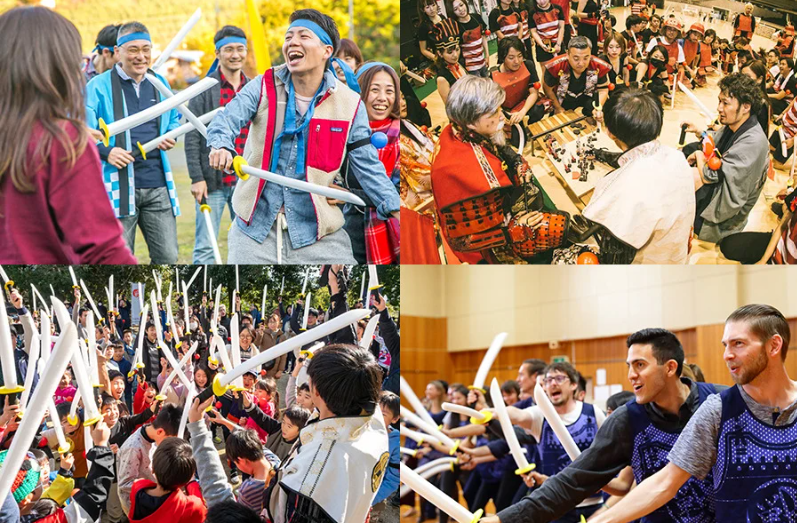
High-Energy & Movement-Based Activities
These programs utilize physical movement to break mental barriers and build resilience.
・SAMURAI BATTLE / Chanbara Battle: Participants use foam swords to hit a “life” ball attached to the opponent’s arm. This simple mechanic requires complex strategy meetings, known as Gun-gi, where teams must assign roles and execute tactical plans. The repetitive nature of the rounds allows teams to practice the PDCA (Plan-Do-Check-Act) cycle in a fast-paced, safe environment.
⇒Download our SAMURAI BATTLE / Chanbara Battle guide.
・Discipline & Resilience Boot Camp: Conducted at professional defense-style facilities, this intensive program immerses employees in a disciplined environment from dawn until dusk. It focuses on fostering mental toughness, punctuality, and professional etiquette through rigorous collective training.
・Deserted Island Survival: Small teams are tasked with surviving on an island for three days with minimal supplies. This extreme environment necessitates diverse communication and forces participants to respect different values while working toward the common goal of self-sufficiency.
・Strategic Bouldering: Climbing artificial walls requires both physical effort and problem-solving. This activity emphasizes safety protocols, mutual encouragement among peers, and the psychological benefits of achieving difficult physical goals.
・Community Impact Cleaning: New hires engage in street cleaning, specifically focused on removing discarded gum. This practice, used by major confectionery manufacturers, instills a sense of corporate responsibility, environmental awareness, and the importance of attention to detail.
Collaborative Group Simulations
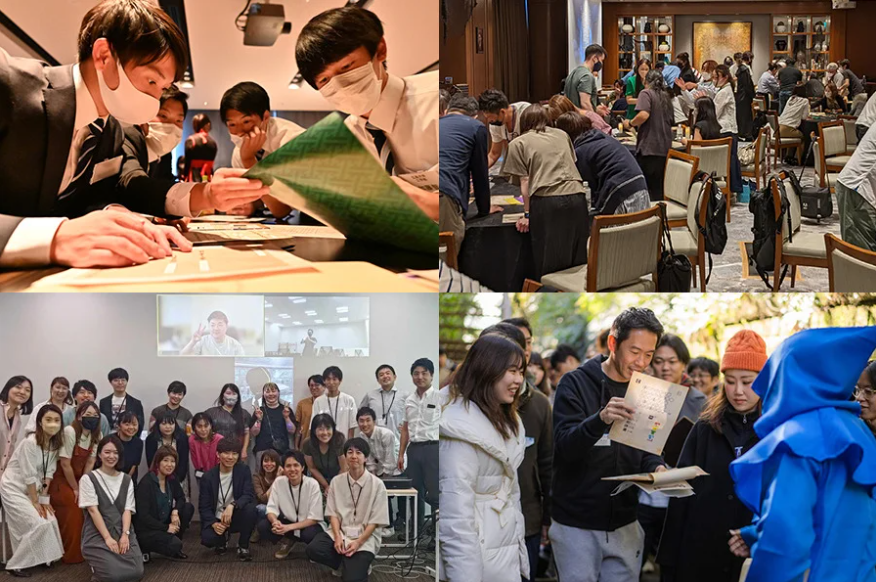
These activities focus on information sharing, empathy, and collective problem-solving.
・THE ENIGMA ESCAPE: Teams must collaborate to solve complex riddles within a set timeframe. Challenges can be customized to include company-specific knowledge, making it an effective tool for increasing camaraderie and a sense of belonging.
⇒Download our THE ENIGMA ESCAPE guide.
・Detective Challenge: The Crime Scene Investigation: Based on educational psychology, this active learning model splits information among sub-groups. Participants must teach their specific findings to the larger group to solve a mystery, ensuring every member is essential to the team’s success.
・Agricultural Planning: Managing a crop from planting to harvest requires long-term planning and the ability to adapt to unpredictable factors like weather. This fosters patience and enhances a team’s capacity for risk management.
・Improvisational Theater: By acting out scripts and focusing on vocal tone and body language, employees improve self-expression. This exercise also develops empathy as participants must analyze and inhabit the perspectives of different characters.
・Empathy-Based Service Training: Some organizations place new hires in childcare settings for several days. By interacting with children and understanding their needs, employees learn to design better services and environments for diverse demographics, directly impacting customer satisfaction.
Strategy & Value-Based Workshops
These simulations focus on leadership, decision-making, and global sustainability goals.
・Leadership Management Simulation (Great Team): Middle managers act as leaders in a business game where they must assign projects and make critical “Leader’s Choice” decisions. By simulating a high-pressure business environment, participants learn to manage resources and maximize team revenue.
・Kaiji: The Ultimate Risk & Strategy Battle: Based on the popular Kaiji series, Japan’s famous psychological manga themes, this experience places teams in high-tension scenarios involving card games and psychological warfare. It promotes trust-building and strategic communication under pressure.
・SURVIVAL CONSENSUS: Participants navigate a narrative-driven survival scenario where they must reach a group agreement. The game highlights the differences in individual values and trains employees in logical thinking and information synthesis.
⇒Download our SURVIVAL CONSENSUS guide.
・Global Leaders Business Simulation: Teams manage competing companies while navigating global events like inflation or deflation. This teaches that pursuing profit in a vacuum is unsustainable, requiring a balanced approach to strategy and social context.
・2030 SDGs Card Game: This simulation mirrors the real-world complexity of balancing economic growth, social equity, and environmental protection. It encourages participants to “internalize” sustainability goals, moving beyond theory to understand the practical necessity of cooperation.
・Remote Crisis Resolution: An online mission where teams solve puzzles to save a fictional planet from environmental collapse. It is an ideal tool for remote team building, teaching the urgency of global issues through collaborative digital play.
・SDGs Value Mapping: A workshop that connects a company’s specific business activities to global sustainability targets. By mapping their roles onto recognized models, employees gain a clearer understanding of how their daily work contributes to a larger purpose.
Maximizing Training ROI
Unique training programs are most effective when they align with the specific culture and goals of your organization. When employees feel that their training is an investment in their experience—rather than just another lecture—their initiative and productivity naturally increase.
Would you like me to create a customized sample schedule for one of these activities, such as the Samurai Strategy Battle or the SDGs Business Game, tailored to your team’s size?
⇒Download our comprehensive guide.