Is your team struggling to stay connected? Traditional “happy hours” often fail to bridge the gap between diverse roles and personalities. If you are looking for a high-impact experience that fosters psychological safety and inclusive collaboration, it is time to look at the Japanese concept of Undokai (Field Day).
In Japan, Undokai is a time-honored cultural event designed to build unity. At IKUSA, we have modernized this tradition into a professional team-building solution. These activities are designed to be “unbalanced,” meaning physical athleticism isn’t the deciding factor—coordination and strategy are the keys to winning.
Whether your goal is to sharpen the PDCA cycle, identify hidden leadership, or simply reward your staff, here are 41 curated activities to transform your organizational culture.
⇒Download our comprehensive guide.
16 Unique & Creative Activities to Spark Collaboration

These activities are designed to break the ice and encourage teams to adapt to unconventional challenges together.
・Ladle Balance Relay This activity requires 10 to 20 participants to balance speed with precision. Each runner carries a ping-pong ball in a ladle, acting as a baton, and must navigate a set course to a turnaround point. Because the ball is exceptionally light, the team must focus on steady coordination rather than raw speed to ensure a seamless handoff.
・Dizzy Bat Dash Injecting energy into any event, this race challenges 10 to 20 people to test their equilibrium. Each player spins around a bat ten times at the starting line before attempting to run a straight line toward their teammates. It serves as an excellent equalizer, as physical fitness matters far less than the ability to laugh through disorientation.
・The Flower Pedestal This is a high-density coordination challenge for groups of 10 to 20. Teams compete to see how many members can simultaneously stand on a small, elevated platform. Success depends entirely on physical cooperation and creative positioning, forcing the group to find a collective balance.
・True or False Quiz To reinforce organizational knowledge, 10 to 20 participants move between “O” (True) and “X” (False) zones marked on the floor. As an MC poses questions about company history or industry trends, those in the wrong zone are eliminated, making it a fun way to align the team around corporate values.
・Stuff-the-Bag Race Efficiency and speed are the focus here for 2 to 20 people. Teams race against the clock to pack as many items, such as ping-pong balls, into a bag as possible. This simple task highlights the importance of organized workflows under time pressure.
・Company PR Race Blending physical movement with communication skills, 5 to 20 participants run to a designated mid-point where they must deliver a short, persuasive pitch about the company’s strengths. Judges score the quality of the PR, integrating professional development into the field day atmosphere.
・Sing and Dance Race Creativity takes center stage for 10 to 20 members who choose a song and perform a rehearsed routine at a specific point during a relay. This activity fosters shared vulnerability and creative expression, which are key components of psychological safety.
・Three Steps Forward, Two Steps Back Precision is the priority for groups of 10 to 20 in this uniquely paced race. Participants must strictly follow a rhythmic stepping pattern—three steps forward and two back—to reach the finish line. Any deviation from the pattern requires a restart, emphasizing the need for disciplined execution.
・Multi-Sport Dribble Relay Catering to diverse interests, 15 to 30 participants choose a ball—whether soccer, basketball, or another type—and dribble it to their next teammate. This allows individuals to lead using their personal strengths while contributing to a common goal.
・Evolutionary Centipede Race This test of synchronization involves 15 to 30 people tied at the ankles. The challenge begins with two people and “evolves” as an additional member is added after every lap, requiring the team to constantly recalibrate their rhythm as the line grows longer.
・Bubble Sumo Designed for 6 to 30 people, this safe but high-impact activity involves participants wearing inflatable bubble suits. The objective is to push opponents out of a designated ring, providing a physical outlet for stress in a completely safe, cushioned environment.
・Duo Caterpillar Race Cooperation is mandatory for 10 to 20 participants who work in pairs inside a cardboard loop. By crawling in unison, the “caterpillar” moves forward. It is a literal representation of being “in sync” with a partner to achieve progress.
・Artistic Gymnastics Formation Teams of 20 to 30 people collaborate to create human structures or shapes. Rather than speed, the group is judged on the creativity, stability, and aesthetic appeal of their formation, highlighting the value of non-competitive, creative collaboration.
・SAMURAI BATTLE / Chanbara Battle; This is the ultimate inclusive strategy game for 10 to 1,000+ players. Participants use foam swords to knock a “life ball” off an opponent’s arm. It features a Gun-gi, or strategy meeting, where teams apply the PDCA cycle between rounds. experience.
⇒Download our SAMURAI BATTLE / Chanbara Battle guide.
・Team Building BBQ More than just a meal, this professionally managed experience for 30 or more people includes interactive games like meat-weight guessing. It leverages the universal bonding power of sharing a meal to dissolve social barriers in a relaxed setting.
・Laser Shooting Battle For groups of 10 to 200, this tactical game uses safe infrared technology. Teams navigate a field to “tag” opponents, requiring high-level communication and tactical positioning without the mess or pain of traditional paintball.
15 Classic Activities Reimagined for the Modern Office
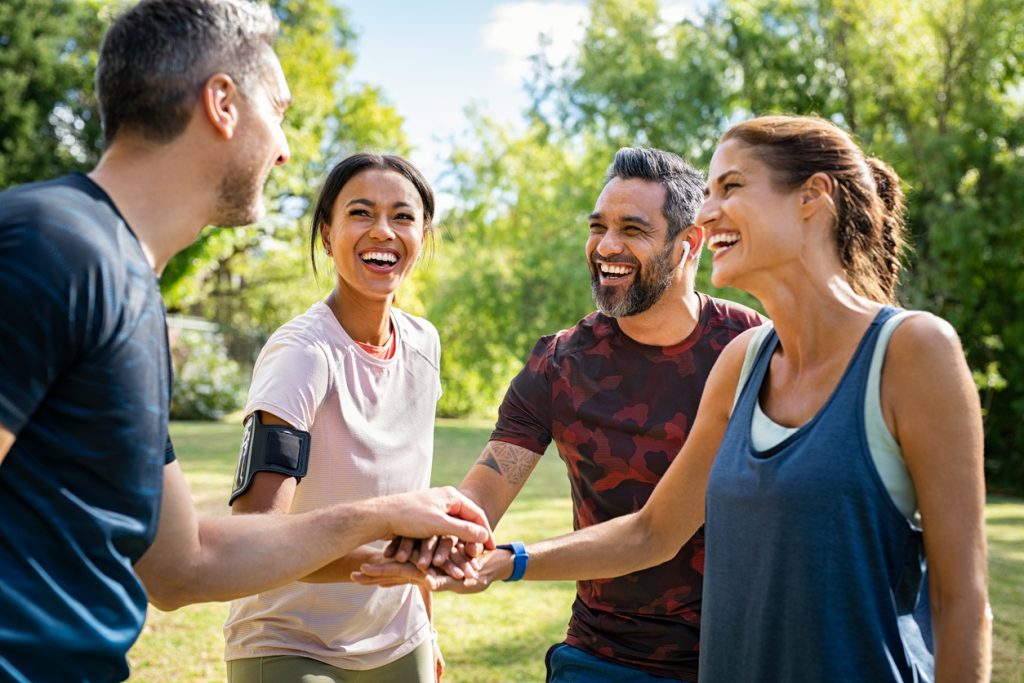
These familiar “Field Day” staples have been enhanced to focus on strategic thinking and group dynamics.
・Strategic Basket Toss (“Tama-ire”)A group of 10 to 20 participants attempts to throw beanbags into a high basket within a time limit. To increase the difficulty and encourage creative thinking, rules can be added such as requiring participants to throw backwards or from a seated position.
・Tug-of-War(Strategic Version) This traditional test of strength for 10 to 20 people can be modified with “rescue” mechanics, where team members must answer a riddle to join the pull, adding a mental layer to the physical struggle.
・Stick Pull In a high-energy scramble for 20 to 30 people, multiple sticks are placed in the center of the field. Teams must decide which sticks to prioritize and how to allocate their “manpower” to pull the most items back to their base.
・Variety Dash Adding a layer of fun to a standard dash, 5 to 20 participants must run while wearing elaborate costumes or while carrying a teammate. It shifts the focus from winning a race to the shared hilarity of the spectacle.
・Musical Chairs Perfect for energizing a group of 20 to 30, this large-scale version of the classic game involves walking around a circle of chairs while music plays. When the music stops, everyone must find a seat, with one chair removed each round to keep the stakes high.
・Obstacle Course A versatile relay for 5 to 30 people that can include physical hurdles, mental puzzles, or trivia stations. It requires a diverse set of skills, ensuring that every team member has a moment to shine.
・Evolution Three-Legged Race The quintessential synchronization exercise for 10 to 30 people. By tying adjacent legs together, pairs or even larger groups must communicate their every step to avoid falling, making it a powerful metaphor for collaborative workflows.
・Bread-Grabbing Race For 6 to 20 participants, this lighthearted race requires grabbing hanging bread with only the mouth. It is a crowd favorite that prioritizes fun and “letting your guard down” over professional posturing.
・Scavenger Hunt (Borrowing Race) This activity for 10 to 30 people requires participants to find a specific item or a person with a particular trait (e.g., “someone who speaks three languages”) and cross the finish line with them, fostering networking across different departments.
・Group Jump Rope A classic test of collective timing for 10 to 30 people. Two members swing a massive rope while the rest jump in unison. It rewards endurance and the ability of the group to find a shared rhythm.
・Leapfrog Relay Teams of 10 to 30 move forward by jumping over teammates who are crouched on the ground. This requires trust and physical coordination to maintain momentum without causing a bottleneck.
・Bucket Brigade In this relay for 20 to 30 people, teams pass buckets of water or items down a line to fill a container. It emphasizes the importance of every link in the “supply chain” and the cost of “leakage” or miscommunication.
・Giant Ball Roll Working in groups of 20 to 30, participants must roll or pass a massive inflatable ball over their heads to reach a goal. The sheer scale of the equipment requires everyone to participate to keep the ball moving in the right direction.
・Futsal A low-contact, 5-a-side version of soccer for 10 to 20 people. Played on a smaller pitch, it encourages quick passing and inclusive play, making it accessible for those who might not typically play competitive sports.
・Cavalry Battle (“Kibasen“) A strategic Japanese classic for 20 to 30 people. Teams of three form a “horse” to carry a “rider.” The goal is to capture the headbands of opposing riders, requiring both the strength of the base and the agility of the rider to succeed.
4 “New Sports” for a Cutting-Edge Experience
・Bubble Soccer Encased in protective inflatable suits, 20 participants play a traditional game of soccer. The bubbles make bumping into each other safe and hilarious, removing the intimidation factor often associated with contact sports.
・Kin-Ball Using a giant, lightweight ball, three teams of 20 people compete simultaneously. Players must shout a specific signal before hitting the ball, and the designated opposing team must catch it before it touches the ground, making it a high-intensity game of focus and communication.
・Foot Darts Combining soccer and darts, 10 to 20 people kick velcro-covered balls at a massive inflatable board. It is a low-intensity, high-engagement game that rewards accuracy and allows for easy scoring and competition.
・Pétanque A relaxed, boules-style game for 10 to 20 people where the goal is to throw metal balls closest to a target. It is perfect for an inclusive setting where conversation and strategy are more important than physical exertion.
6 Virtual Activities for Global & Remote Teams
Ensure your remote employees experience the same level of connection with these digital-first options.
・Virtual Escape Mystery In this digital escape room for 15 to 500 people, teams collaborate in breakout rooms to solve complex riddles. It replicates the pressure of a real-world mission and requires high-level virtual communication.
・Virtual Scavenger Hunt An energetic game for 2 to 50 people where an MC gives a prompt—such as “find the oldest thing in your kitchen”—and participants race to show the item on camera. It provides a rare, humanizing glimpse into the lives of remote colleagues.
・Disaster Preparedness “Spot the Difference” Combining training with play, 2 to 100 participants watch videos to identify safety hazards. It turns a serious compliance topic into an engaging team challenge.
・Brain Training Clock Battle A quick mental exercise for 2 to 100 people where participants use their arms to represent a time called out by the MC. It’s a fast-paced way to sharpen focus and inject energy into a virtual meeting.
・All-Employee Thanksgiving Quiz A high-production virtual show where the entire company uses their smartphones to answer trivia. This is an excellent way to celebrate milestones and build a sense of shared history.
・Object Shiritori Relay A physical-meets-digital game where players must find an object in their home that starts with the last letter of the previous player’s item. It keeps remote teams moving and thinking creatively in a relay format.
Seamless Execution for Global Success

Organizing an event of this scale can be a burden on internal HR teams. To ensure seamless execution and a high impact, professional production is key. We provide end-to-end support, including English-speaking facilitators and activities designed specifically for inclusive, multicultural environments.
Transform your team today.
⇒Download our comprehensive guide.