In today’s globalized workplace, the Icebreaker is a strategic tool for fostering Psychological Safety and Active Listening. Whether you are hosting a team in Tokyo, London, or New York, the objective is to move beyond awkward small talk and build a foundation of mutual trust and understanding.
When teams understand each other’s personal values and communication styles, organizational silos begin to dissolve. Below is a curated list of 18 icebreakers—ranging from Japanese-inspired classics to universal global favorites—designed to drive engagement and synergy.
⇒Download our comprehensive guide.
Mastering the Art of Connection: 15 Japanese-Inspired Icebreakers

These methods focus on structured sharing and memory-building, which are highly effective for fostering a sense of one team.
- Stacking Introductions: Participants line up and introduce themselves. The catch is that each person must repeat the names of everyone who spoke before them . It is a high-engagement tool for mastering names in groups of up to 10.
- Introduction of Others: Form pairs and conduct a 5-minute interview about each other’s hobbies and backgrounds . Each person then presents their partner’s profile to the group, which helps shy members feel seen and valued.
- Good or New: Each member shares one good thing or new discovery from the last 24 hours. The entire team gives a round of applause after each share to build an instant positive atmosphere.
- Commonality Search: Pairs find exactly 10 things they have in common within a set time limit. This encourages deeper conversation and reveals hidden personal connections.
- Name Relay: A variation of stacking where you introduce yourself by saying, “I am [Name], sitting next to [Person A], who is next to [Person B]” .
- Fantasy Introduction: Participants use the prompt “If I were [X], I would [Y]” to share a side of themselves not tied to their professional title. This reveals core values through creativity .
- Two Truths and a Lie: Each person writes three facts and one lie about themselves. The group then votes to identify the lie, revealing surprising personal anecdotes .
- The Hero Interview: Assign an Interviewer to ask strategic questions to draw out a specific success story or peak experience from a Hero partner .
- Who Am I?: Everyone writes 3-5 personal facts on an anonymous memo . A facilitator reads them aloud, and the team guesses which colleague it describes.
- Actually, I am… : Participants add a surprising Self-PR fact beginning with “Actually…” to their standard introduction. This humanizes leadership and encourages vulnerability.
- Favorite X: Set a theme like Favorite Travel Destination. Each person shares their choice and the specific reason why, lowering barriers to entry for large groups .
- Recent Joy: Members share one specific event from their recent past that made them genuinely happy or excited .
- Dice Introduction: Assign topics to each face of a die. Each person rolls the die and must talk about the corresponding topic.
- Nickname Workshop: In small groups, members introduce themselves, and the other members propose a friendly nickname based on the shared stories .
- Kanji Persona: For a cultural twist, participants choose one Japanese character (Kanji) that represents their work ethic or personality and explain why .
Universal Global Favorites: Familiar & Effective
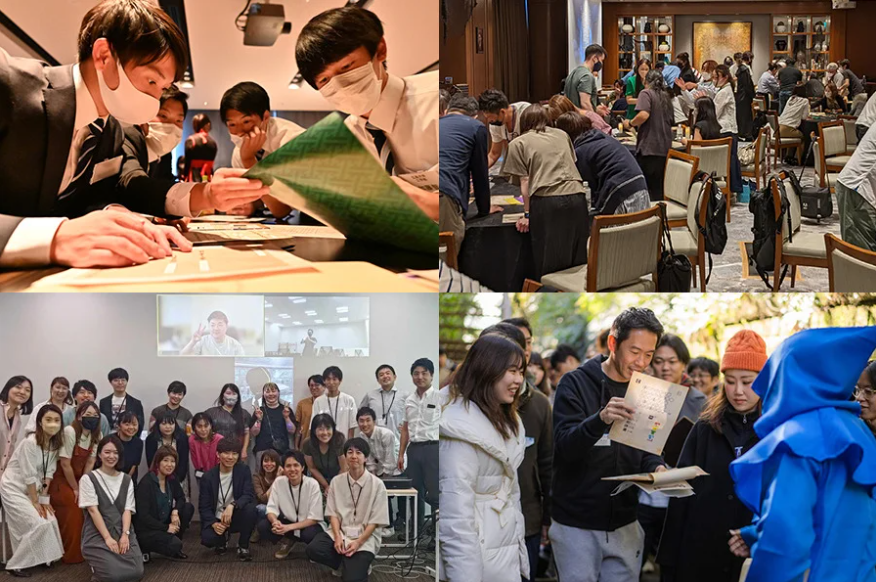
To ensure your Western-based team members feel at home, we recommend incorporating these widely recognized global standards:
- Human Bingo: Participants receive a grid of traits (e.g., “Has visited 5+ countries,” “Is a morning person”). They must mingle to find colleagues who fit the descriptions and sign their names in the squares.
- Speed Networking: Similar to speed dating, colleagues have 2-minute sprints to discuss a specific professional prompt before rotating. This is ideal for large-scale networking where efficiency is key.
- The Desert Island Scenario: A variation of the Survival logic. Participants choose three items they would bring to a deserted island and explain how their choices reflect their problem-solving style.
In addition to these icebreakers, professional simulations can further solidify these connections. Once the ice is broken, professional facilitators can help your team practice high-level communication and leadership through immersive simulations.
Professional Synergy Simulations
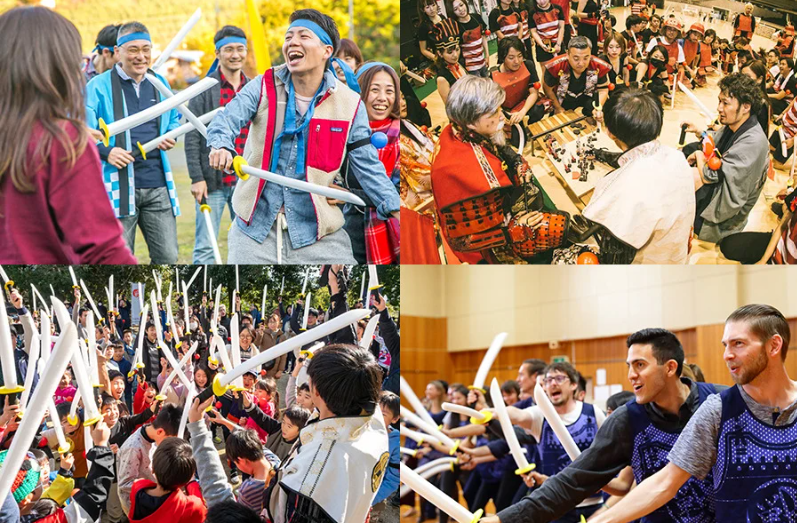
・SAMURAI BATTLE / Chanbara Battle:: Teams engage in safe battles using sponge swords, iterating through a rapid Battle – Strategy Meeting (Gun-gi) – Battle cycle. This physically reinforces the PDCA cycle and identifies real-time leadership dynamics .
⇒Download our SAMURAI BATTLE / Chanbara Battle guide.
・Survival Consensus: High-stakes simulations—such as surviving a Zombie Pandemic or Jungle Crash—that require teams to reach 100% agreement on their priorities. This teaches negotiation skills and the value of collective intelligence.
⇒Download our SURVIVAL CONSENSUS guide.
・Exploration Quest: An outdoor exploration game where teams walk through a city or resort to solve puzzles . It builds unity through shared discovery and eureka moments .
⇒Download our EXPLORATION QUEST guide.
・THE ENIGMA ESCAPE (Mystery Solving):: An spectacular visual experience where a master carves a giant tuna on-site. It’s the ultimate centerpiece for an international networking party.
⇒Download our THE ENIGMA ESCAPE guide.
Building the Foundation for High-Performance Teams

Every successful collaboration begins with a strong foundation of trust and psychological safety. By implementing these 18 structured self-introduction games, you can transform a room of strangers into a cohesive unit ready for any challenge. IKUSA manages over 1,000 events annually, providing professional “entertainer” facilitators who ensure that even the most simple introductions become powerful bonding experiences for up to 1,000+ participants. Ready to sync your team with a genuinely effective and inclusive program in Japan?
⇒Download our comprehensive guide.