In today’s fast-paced corporate world, HR managers and team leaders face a disconnection challenge. With the rise of hybrid work and cross-functional silos, teams often struggle to find common ground. Leaders are constantly searching for team-building activities that move beyond obligatory and deliver actual Return on Investment (ROI).
If you are looking for a high-impact, low-resource game that bridges the gap between simple play and strategic business training, the Paper Tower Challenge is your answer.
Used in over 1,400 events annually, this activity proves that you don’t need a massive budget or complex technology to foster psychological safety, leadership, and agile thinking. It strips away the distractions of modern office life and focuses on the core of business success: Collaboration under constraints.
⇒Download our comprehensive guide.
What is the Paper Tower Challenge?
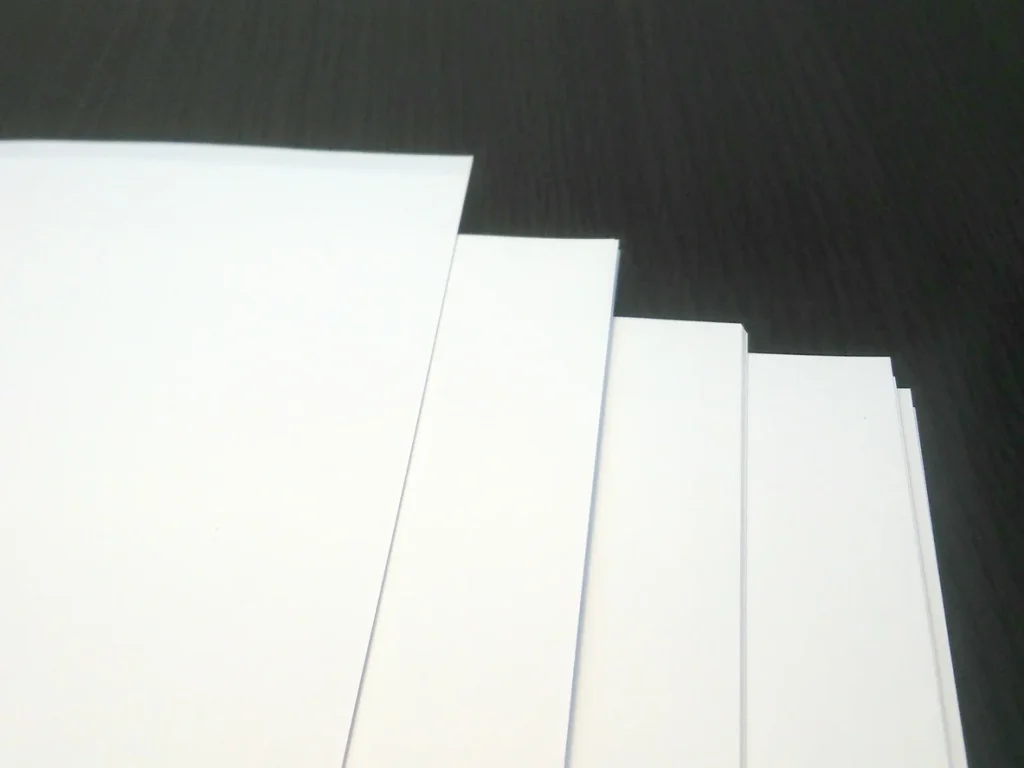
The Paper Tower is a world-renowned business simulation where teams of 4–5 people compete to build the tallest self-standing tower using only 30 sheets of A4 paper within a strict time limit.
It sounds deceptively simple. However, the constraints transform this creative exercise into a high-pressure engineering and leadership challenge.
- The Constraints: To succeed, teams must operate without glue, tape, or scissors. They must rely on physics—folding, tearing, and balancing—to create stability.
- The Success Metric: The tower is not measured immediately upon completion. It must stand unaided for at least 10 seconds. This rule teaches the vital business lesson of sustainability over speed.
The win condition relies entirely on seamless collaboration. Teams are encouraged to assign specific roles—some focusing on structural components (base pillars), while others act as site managers monitoring balance and remaining time. It proves that individual talent (the ability to fold paper well) is nothing without a collective strategy (how the pieces fit together).
Why This Works for Business

Why do top-tier HR professionals include the Paper Tower in their curriculum? It effectively simulates the PDCA (Plan-Do-Check-Act) Cycle in a condensed timeframe.
To maximize the Return on Time, we recommend running multiple rounds. The magic happens not in the building, but in the iteration.
1. The Planning Phase (Strategy)
Teams are given 5 minutes to discuss designs. However, they are usually allowed only one sheet of paper for prototyping. This requires the team to visualize the outcome and agree on a blueprint before committing resources—a critical skill in project management.
2. The Execution Phase (Agility)
During the 5-minute build, chaos often ensues. The plan might fail. The paper might buckle. This is where Situational Leadership emerges. Who steps up when the plan fails? Who communicates calmly under pressure? The stiff silence of the office disappears, replaced by active, goal-oriented dialogue.
3. The Review Phase (Psychological Safety)
After the height is measured, a post-event analysis is conducted. Teams discuss what worked and what failed. Because the stakes are low (it’s just paper), teams can practice failing fast and learning faster. This builds psychological safety, allowing team members to voice ideas without fear of judgment in future, real-world projects.
The Profit & Loss Simulation
For senior leadership or sales teams, we recommend adding a financial layer to the game.
In this version, the objective changes from Height to Profit.
- Revenue: Each centimeter of height generates a specific dollar amount (e.g., $10,000 per cm).
- Cost (Cost of Goods Sold): Each sheet of paper costs money (e.g., $2,000 per sheet).
- Tax/Penalties: Unused paper or collapsed towers incur heavy fines.
This variation teaches the fundamentals of corporate finance. Teams must balance the desire for a massive structure (Revenue) with the need to conserve resources (Cost Control). It turns a team-building game into a lesson on ROI and operational efficiency.
5 Strategic Benefits for Your Global Team
For global companies operating in Japan, the Paper Tower offers unique advantages:
- Breaking Language Barriers: The goal is physical and visual. Even if team members have different levels of English or Japanese proficiency, they can collaborate through demonstration and action.
- Discovering Hidden Gems: Quiet employees often emerge as brilliant structural strategists or time-keepers. The game flattens the hierarchy, allowing junior members to lead seniors.
- Goal Alignment: The simple objective (building high) creates a clear overarching goal for the team, fostering a culture of shared success.
- Embracing Agility: The game rewards teams that can pivot quickly when their structure becomes unstable, mirroring the need for corporate agility in a changing market.
- Inclusive Innovation: Activities like the Paper Tower are completely barrier-free. They do not require physical strength, making them suitable for all ages and physical abilities.
Engineering Innovation through Collective Strategy

The Paper Tower Challenge is proof that high-level team building doesn’t require a massive budget, only a massive commitment to collaboration. However, the success of the event depends heavily on the facilitation.
Simply handing out paper is not enough. You need a professional facilitator to set the atmosphere, manage the strict timing to induce constructive stress, and guide the crucial reflection sessions that cement the learning.
At IKUSA, we deliver over 1,400 events annually. We provide professional English-speaking facilitators who bridge cultural gaps for teams ranging from 30 to over 1,000 participants. Whether you are practicing the PDCA cycle through Paper Towers or engaging in our high-energy SAMURAI BATTLE / Chanbara Battle), we ensure your event is safe, inclusive, and ROI-driven.
Don’t settle for obligatory fun. Choose a team-building experience that syncs your global team and provides actionable insights for tomorrow’s business challenges.
Looking for a unique, high-impact team-building idea in Japan?
⇒Download our comprehensive guide.