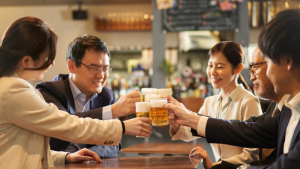
As inbound tourism to Japan recovers to pre-pandemic levels, global companies are increasingly choosing Japan as the destination for their off-sites and corporate retreats.
For international teams, simply sightseeing is not enough. To truly bridge cultural gaps and foster psychological safety, shared experiences are essential. Japan offers a unique blend of traditional discipline, harmony (Wa), and history that can be translated into powerful lessons for modern business teams.
The following 20 activities are designed to strengthen team bonds, starting with three high-impact active programs perfect for breaking the ice.
⇒Download our comprehensive guide.
Top 3 Immersive Team Building Activities
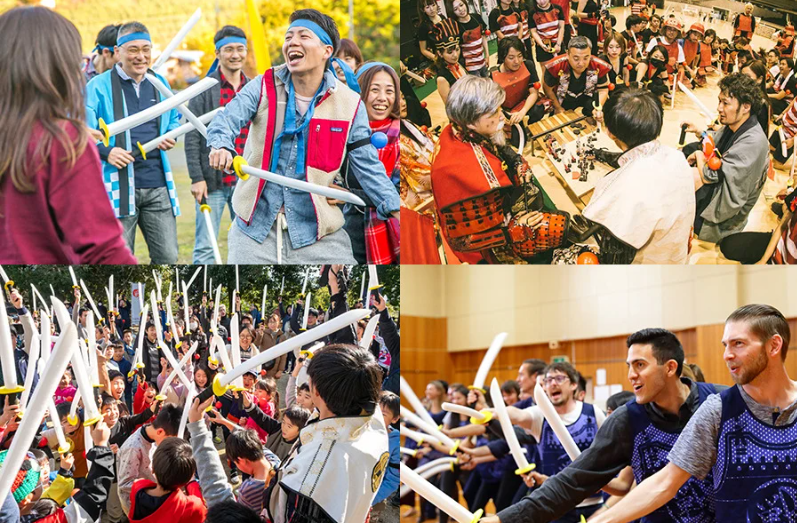
These three activities move beyond passive observation. They require strategy, communication, and collaboration, making them perfect for activating global teams.
The Ultimate Strategy Game for Corporate Warriors
- Overview: The concept of the Samurai is globally recognized. Chanbara Gassen takes this iconic image and turns it into a safe, strategic team sport. Participants hold soft sponge swords and attach a “life ball” to their arm. The goal is simple: knock off the opponent’s ball while protecting your own.
- Why it works for teams: It is not merely physical; it is strategic. Teams must devise battle plans, assign roles (attackers vs. defenders), and communicate non-verbally in the heat of battle. It mirrors the PDCA (Plan-Do-Check-Act) cycle in a high-energy environment.
- Inclusivity: The swords are made of soft sponge, ensuring safety for all ages and genders. The rules are simple, and physical strength does not determine the winner, creating a level playing field.
- Scale: Suitable for groups of 30 to over 1,000 participants.
⇒Download our SAMURAI BATTLE / Chanbara Battle guide.
Authentic Samurai Crafts—No Physical Activity Required
- Overview: For teams seeking a more relaxed yet deeply immersive experience, this workshop offers a specialized static activity. Unlike physical team building, this workshop focuses on experiencing history through craftsmanship and attire. Participants can engage in authentic activities such as wearing heavy, realistic Samurai Armor, creating original Katana (swords), or painting Sengoku (Warring States period) Lanterns.
- Why it works for teams: It fosters mild interaction and mutual understanding. Conversations naturally spark as colleagues help each other with armor, take photos of their kimono looks, and share their handcrafted works. It is an ideal side-content for corporate parties.
- Inclusivity: Fully accessible. Designed to be accessible while seated, making it perfect for older participants, those with physical disabilities, or children. We use high-quality materials to provide an authentic experience, not cheap plastic toys.
- Scale: Available from 30 participants.
⇒Download our Samurai Heritage Workshop guide.
Discovering the City through Logic and Cooperation
- Overview: While traditional sightseeing is passive, Hirameki Quest (Inspiration Quest) turns the city into a game board. Teams explore historical areas (like Asakusa or Kyoto) or the event venue itself while solving puzzles and riddles hidden in the architecture and culture.
- Why it works for teams: It requires collective intelligence. Success depends on diverse skills—observation, logic, and navigation. It invites team members to listen to each other to solve complex problems, all while enjoying the sights of Japan.
- Inclusivity: This is an intellectual challenge that does not require athletic ability. It can be played at a walking pace, allowing team members of varying fitness levels to contribute equally through their insights and observations.
- Scale: Flexible format suitable for 30 to hundreds of participants.
⇒Download our EXPLORATION QUEST guide.
In addition to these immersive games, Japan offers a wealth of traditional practices and excursions.
Traditional Arts: Cultivating Mindfulness & Focus

For teams that need to slow down and practice mindfulness, these traditional arts offer a lesson in focus and precision.
4. Taiko Drumming Experience
The sound of the Wadaiko (Japanese Drum) resonates in the core of the body.
Team Benefit: Synchronization. To create a unified rhythm, the team must breathe and move as one. It is a powerful metaphor for organizational alignment.
5. Calligraphy (Shodo)
Writing Kanji (Chinese characters) with a brush and ink.
Team Benefit: Mindfulness. Grinding the ink and focusing on a single character helps clear the mind, offering a break from digital distractions.
6. Tea Ceremony (Sado)
More than just drinking tea, this is a comprehensive art form involving architecture, flowers, and hospitality.
Team Benefit: Hospitality (Omotenashi,Hospitality). It teaches the importance of anticipating needs and showing respect—vital skills for client relations.
7. Flower Arrangement (Ikebana)
Arranging flowers to reflect the seasons and the concept of Wabi-Sabi (the beauty of imperfection).
Team Benefit: Aesthetics & Balance. It encourages creativity within constraints.
8. Japanese Dance (Nihon Buyo)
Experiencing the elegant movements and posture of traditional dance.
Team Benefit: Non-verbal Communication. Understanding how posture and gesture convey meaning.
Craftsmanship: Creating Together
Manufacturing (Monozukuri) is the backbone of the Japanese economy. Creating something tangible together builds a sense of shared achievement.
9. Pottery (Togei)
Using a potter’s wheel or hand-forming clay to make bowls and plates.
Team Benefit: A relaxing environment that encourages casual conversation and creativity.
10. Washi Paper Making & Indigo Dyeing
Experiencing the texture of handmade paper and the deep Japan Blue of indigo.
Team Benefit: Appreciating the process and patience required for quality results.
11. Wind Chime Making
Creating glass wind chimes, a symbol of Japanese summer.
Team Benefit: Creating a shared memory (souvenir) that represents the sound of the team’s time in Japan.
Excursions: Shared Inspiration
Taking the team out of the meeting room to explore Japan’s unique environments.
12. Castle Tours
Japan has castles with unique architecture like stone walls and moats. Only 12 castles retain their original main keeps (e.g., Himeji Castle, Matsumoto Castle).
Team Benefit: Learning about history and leadership from the stories of past feudal lords.
13. Shrine & Temple Visits
Experiencing the serenity of Zen temples or Shinto shrines.
Team Benefit: A chance for reflection and mental resetting. Trying “Omikuji” (fortune slips) together is a fun ice-breaker.
14. Factory Tours
Visiting breweries or food factories.
Team Benefit: Learning about Kaizen (continuous improvement) and Japanese operational excellence.
15. Geisha/Maiko Experience
In Kyoto, team members can dress as Maiko (apprentice Geisha) or watch a performance.
Team Benefit: Cultural immersion and understanding the high context of Japanese social interactions.
16. Aquarium & Zoo Visits with a Twist
Places like the Sumida Aquarium incorporate Japanese artistic elements (e.g., Edo-themed goldfish exhibits).
Team Benefit: A relaxing, low-stress environment for networking.
Entertainment: The Energy of Japan
Sometimes, the best team building is simply having fun and sharing energy.
17. Fireworks Festivals (Hanabi)
Japanese firework festivals are a major summer event, often involving traditional clothing (Yukata) and food stalls.
Team Benefit: A shared emotional experience of beauty and celebration.
18. Kabuki & Theater
Watching traditional Kabuki or the unique Takarazuka Revue (all-female troupe).
Team Benefit: Exposure to world-class storytelling and stagecraft.
19. Idol Culture Experience
Visiting Akihabara to experience the subculture of Anime and Idols.
Team Benefit: Understanding modern Japanese pop culture and trends.
20. Ryokan (Traditional Inn) Stay
Staying at a Japanese inn with hot springs (Onsen), “tatami” (traditional straw mat) rooms, and traditional course meals.
Team Benefit: Deep Connection. Socializing in hot springs breaks down hierarchical barriers like nothing else.
Planning Your Event

Integrating Japanese cultural experiences into your off-site or team-building event is a powerful way to increase engagement and create lasting memories.
Whether you choose the high-energy strategy of a Samurai Battle, the intellectual challenge of a Hirameki Quest, or the quiet focus of Zen meditation, the key is to choose an activity that aligns with your team’s goals.
Looking for a turnkey solution for your team in Japan? At IKUSA, we specialize in combining Japanese culture with strategic team building. From planning to execution, we ensure your global team has an unforgettable experience.
⇒Download our comprehensive guide.