Mastering the Business Dinner: A Strategic Guide to Japanese Social Dining and Team Bonding
Time taken to read : 10 minutes
2026.01.31
Team-Building & 100 Experiential Events
Time taken to read : 10 minutes
2026.01.31
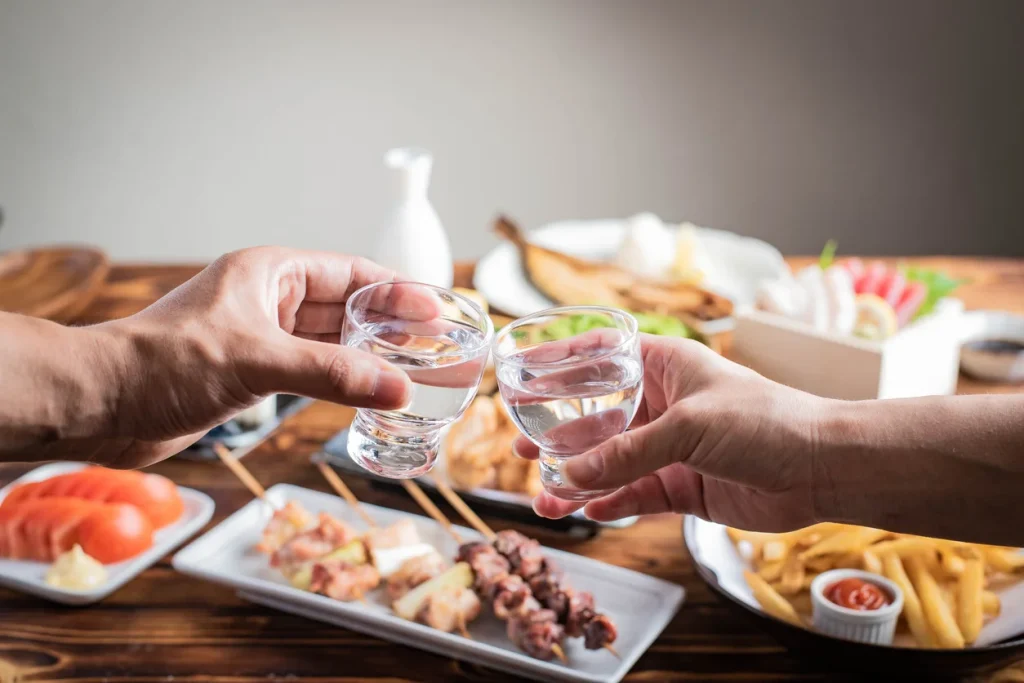
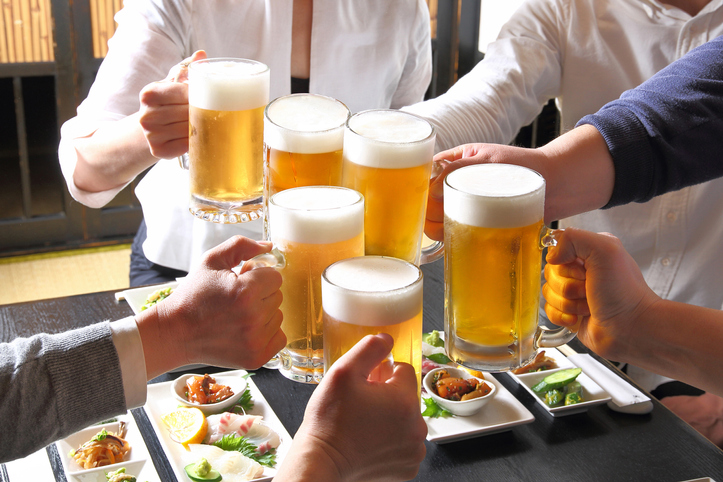
For HR professionals managing diverse teams or planning events in Japan, understanding the drinking party,”Nomikai” is essential for fostering organizational harmony. These gatherings are more than just social events; they are strategic opportunities for bonding between employees who may not interact during daily operations.
When executed correctly, a “Nomikai“ acts as a powerful tool for employee engagement and team cohesion. This guide covers essential etiquette and high-impact activities to ensure your next team dinner is a professional success.
⇒Download our comprehensive guide.

In Japanese business culture, the impression an employee makes begins before the first drink is served. Adhering to proper protocol ensures a professional atmosphere and fosters mutual respect.
A Sign of Reliability: Arriving on time is a core business expectation. Lateness can negatively impact an individual’s professional reliability.
Entry Etiquette: Remove coats and scarves before entering the venue to maintain decorum and respect for the dining space.
Understanding the hierarchy of the table is crucial for maintaining professional respect:
Upper Seat, “Kamiza” : The seat furthest from the entrance, reserved for the highest-ranking individuals.
Lower Seat, “Shimoza”: The seat closest to the entrance, typically occupied by junior staff who manage orders and facilitate the flow of the evening.
While superiors may call for “Bureiko” (a rank-free, relaxed environment), HR should advise employees to maintain professional boundaries.
The Pouring Custom: When pouring or receiving drinks, use both hands to show respect.
The Toast Rule: During a toast, junior employees often ensure the rim of their glass is lower than that of their superior.
Inclusivity for Non-Drinkers: Respecting those who do not consume alcohol is vital. Modern gatherings prioritize choice, and non-drinkers should feel supported to maintain an inclusive environment.
To transform a standard dinner into a high-ROI team-building event, consider incorporating structured activities. Here are two impactful options:
A professional sushi chef performs a live demonstration by expertly dismantling a massive tuna—often exceeding 40kg—directly before your guests as the centerpiece of a fresh sushi party. This high-impact visual experience creates a collective “Wow!” moment that effectively dissolves social barriers and sparks natural conversation among colleagues.
In this blind-testing challenge, teams collaborate to distinguish between high-end luxury goods and everyday products, such as fine wines or premium chocolates, using only their collective senses. This interactive exercise requires teams to share observations and reach a consensus, fostering effective communication and psychological safety through shared decision-making.
In Japanese culture, the follow-up is as significant as the event itself.
Immediate Thanks: If the company or a superior hosted the meal, employees should express gratitude at the venue.
Professional Follow-up: A brief thank-you email the following morning strengthens positive professional relationships and demonstrates thoughtfulness..

Whether you are hosting a formal dinner or a high-energy samurai strategy session, the goal remains the same: to understand each other better. IKUSA supports over 1,000 events annually, providing everything from English-speaking MCs to seamless venue coordination for startups and global corporations alike.
Looking for a unique, inclusive team-building idea in Japan? Contact us today to plan your event
In the modern workplace, team building has evolved from a simple social perk to a strategic necessity. High-performing teams in North America, Europe, and Australia are increasingly turning to board games to cultivate psychological safety, strategic alignment, and inclusive leadership. This guide introduces 20 curated board games—ranging from sophisticated Japanese business simulations to world-renowned titles—specifically chosen for their ability to deliver high ROI in professional development. ⇒Download our comprehensive guide. Specialized Corporate Training Simulations (Japan-Origin) These games are engineered for organizational growth, focusing on ESG, project management, and cross-functional synergy. 1. World Leaders (SDGs Business Simulation) A flagship training game by IKUSA, where teams act as nations competing for profit while balancing global social impact. Teaches that long-term profitability is inseparable from environmental and social responsibility. How to Play Teams utilize labor, capital, and information to maximize their funds. Players engage in cross-team negotiations and strategic item usage. The scoring system rewards actions that positively impact the environment and society, mirroring real-world ESG goals. The team with the highest final capital wins. 2. Sustainable World BOARDGAME A practical tool for understanding the United Nations’ Sustainable Development Goals through real-world case studies. Simplifies complex global issues into actionable business logic. How to Play Players take turns rolling dice and moving their piece the corresponding number of spaces. When you land on a space, you draw a Mission Card and complete the challenge using your resource cards. Success is measured by two metrics: personal growth points and the collective "SDGs achievement level" of the entire table. 3. Upperland (Crisis Management) A high-stakes simulation where players must save a theme park on the brink of bankruptcy. Forces teams to practice transparent communication under pressure. How to Play Six roles (CEO, HR, Sales, Attractions Operations, Facility Management, and Food & Retail) are assigned, each with different information. Each player receives action cards describing their department's capabilities but cannot show them to others. Players must verbally communicate what they can do while listening to understand others' capabilities. The team must respond to random incidents and accidents while working to turn a profit within the time limit. 4. Project Theme Park Simulates the Agile lifecycle of building a theme park, developed by project management experts Nulab. Builds empathy between project managers and team members regarding deadlines and resource constraints. How to Play Teams plan the construction of various attractions within a set timeframe. Players use dice rolls and "Motivation Cards" to determine the success of tasks. The goal is to complete all attractions before the final turn while managing team morale. 5. Marketing Town A dynamic city-building simulation where players experience the full cycle of business management. Enhances financial literacy and market-responsive decision-making. How to Play Players act as business owners in a virtual town. Each turn, you choose one action: Market Research, Procurement, Advertising, or Sales. Players must balance their cash flow and inventory to outperform competitors over several years. 6. Flowchart Puzzle A logic-based game designed to demystify programming and algorithmic thinking. Improves structural thinking and collaborative problem-solving. How to Play Teams are given a "goal" state for a specific process. Using limited cards (Variables, Math, If-Then statements), players must build a logical flowchart. The first team to complete a functioning loop that reaches the goal wins. 7. Health Management Game A simulation that correlates employee well-being directly with corporate productivity. Crucial for HR leaders looking to foster a culture of empathy and "Health and Productivity Management." How to Play Each player takes a role (CEO to Junior Staff) and manages "Mental" and "Physical" health cards. Players must complete business projects while ensuring no team member’s health cards drop to zero. The win condition is reaching 100 million yen in assets without anyone burning out. 8. Biz Storm A comprehensive "Business Experience" game that covers 8 fiscal periods of growth. Helps specialists (IT, Sales, HR) understand the "Big Picture" of how a company scales. How to Play The game moves through cycles of R&D, Sales, and Accounting. Players decide how to invest their limited time and capital into different markets. The winner is determined by the total corporate value (assets + market share) at the end of the 8th period. 9. Zubari Kibari Animatch (DE&I Training) An empathy-building game focused on disability employment and workplace inclusivity. Facilitates difficult conversations about "Reasonable Accommodation" in a safe, game-like setting. How to Play Players are divided into Senior Employees and New Hires with Disabilities. Players must discuss workplace tasks while navigating specific barriers simulated by the game. The goal is to find creative workarounds that allow the entire team to succeed together. Part 2: Communication & Strategy Classics These games are perfect for breaking down silos and improving interpersonal dynamics. 10. Codenames A world-famous word association game that tests how well you know your teammates' thought patterns. Enhances communication precision and shared mental models. How to Play Two teams each have a "Spymaster" who knows the secret identities of agents on a grid. The Spymaster gives a one-word clue that relates to multiple words on the board. Field operatives try to guess their team's words while avoiding the Assassin. 11. Pandemic A fully cooperative survival game where the team wins or loses together. Eliminates internal competition and focuses on a "One Team" mindset. How to Play Players take unique roles (Scientist, Dispatcher, etc.) with special abilities. You must travel across a world map to treat infections and build research stations. The team wins only if they discover all four cures before the infection spreads too far. 12. Captain Sonar An intense, real-time battle between two submarines that requires perfect role-clarity. Ideal for practicing high-speed coordination and active listening. How to Play Players divide into roles: Captain, Radio Operator, Engineer, and First Officer. Teams sit on opposite sides of a screen; the Captain calls out moves while the Radio Operator tracks the enemy's location based on sound. The first team to land four hits on the enemy submarine wins. 13. Just One A cooperative party game that rewards "out-of-the-box" thinking. Demonstrates the value of diverse perspectives in problem-solving. How to Play One player is the Guesser and cannot see the secret word. Other players write a one-word clue on their boards. Identical clues are canceled out; the Guesser must identify the secret word using only the remaining unique clues. 14. ito (Japanese Culture Hit) A communication game where numbers are translated into subjective analogies. Great for Ice Breaking and understanding the subjective values of colleagues. How to Play Each player receives a secret number card (1–100). Based on a theme (e.g., Popular Foods), players describe their number’s strength without saying the digit. The team works together to place the cards in ascending order based on the descriptions. 15. Hanabi (Firework) A cooperative card game where you see everyone’s hand except your own. Teaches the importance of "Giving the Right Information at the Right Time." How to Play Players hold their cards facing outward. You must give hints to your teammates about the colors or numbers in their hands. The group wins by playing cards in the correct sequence to build a perfect firework display. 16. Team of The Dead A management-themed game set in a quirky world of ghosts and village chiefs. Provides a lighthearted way to discuss management styles and team bottlenecks. How to Play Each player draws a Village Chief card and 6 Charm (Ofuda) cards. You use the charms to manage your team of ghosts through various challenges. The player with the highest total points from their managed cards at the end wins. 17. Team Up! A tactile puzzle game that rewards spatial coordination and collaborative planning. Promotes immediate feedback loops and physical teamwork. How to Play Players take turns drawing instruction cards that dictate which block to stack. The team must stack blocks on a pallet as densely as possible. The game ends when no more blocks can be placed; points are awarded for how perfectly the pallet is filled. 18. Kotobartel A team-based word deduction game that focuses on predictive empathy. Sharpens the ability to anticipate a partner's logic and linguistic cues. How to Play In 2v2 teams, players sit diagonally from their partners. Everyone thinks of a 5-letter word and gives it to the player on their right. Players draw letter cards to build clues; the goal is for your partner to guess your word before the other team does. 19. The Game A minimalist, high-tension cooperative challenge using numbers 1 through 100. Develops Implicit Coordination—learning to work together without explicit data. How to Play Players must discard cards into four piles (two ascending, two descending). You cannot reveal the exact numbers in your hand. Communication is limited to vague warnings (e.g., Don't touch this pile!). The goal is to play all 98 cards. 20. Cat & Chocolate: Ghost House Edition A Crisis Response game where the only limit is your creativity. Boosts presentation skills, rapid thinking, and team bonding through humor. How to Play Players are presented with a Supernatural Accident(e.g., a ghost attack). You must use the items in your hand (e.g., a Cat and Chocolate" to explain a solution. The other players vote on whether your explanation was clever enough to succeed. Conclusion: Choosing the Right Strategy For HR professionals and event planners, the key to a successful workshop is matching the game to your organizational goals. If you need to focus on Sustainability (SDGs), choose World Leaders. If your goal is Psychological Safety, ito or Just One are excellent choices. By integrating these board games, you move beyond forced fun into authentic, high-impact team development. ⇒Download our comprehensive guide.
Fostering Authentic Communication These tools are designed to facilitate storytelling and empathy, allowing team members to discover new facets of their colleagues' personalities. ⇒Download our comprehensive guide. Talk Theme Trump En: This deck of cards transforms standard playing cards into a structured icebreaker. Each card features a specific prompt, such as "Your favorite comfort food" or "A memorable team-bonding moment."By gamifying the art of conversation, it encourages active participation and serves as a versatile communication starter or a standard game when the conversation needs a shift. The "Nuance" Challenge: This activity focuses on non-verbal cues and emotional intelligence. Players must convey a specific nuance of a short phrase, like the word "Huh?" expressed through anger, surprise, or admiration, using only their voice and facial expressions. It is a low-barrier game that builds empathy and helps teams better read one another's social signals. In a diverse global workplace, this low-barrier game helps teams decode subtle social signals and builds deep empathy among colleagues. Just One: A collaborative word association game that rewards creative thinking. Players provide one-word hints to help a teammate guess a secret word. If two players provide the same hint, those hints are discarded, forcing the team to think outside the box to ensure their colleague has enough information to succeed. Best Friends: This game is ideal for deepening mutual understanding. A rotating "judge" poses questions like "What is the best way for this person to spend $10,000?" while others try to guess the answer that would please them most. It shifts the focus to individual appreciation and recognition within the team. Strategic Thinking and Cognitive Diversity [caption id="attachment_1147" align="alignnone" width="1024"] Crazy young couple having fun for new year's eve party wearing t-rex and chicken mask - Fashion people celebrating at fest event - Holidays concept - Focus on faces[/caption] These games emphasize logic, risk assessment, and the ability to understand different perspectives under pressure. Coyote: A fast-paced game of psychological warfare and probability. Players see everyone’s cards except their own and must guess the total sum of all cards in play. It requires reading opponents' reactions and making calculated risks, mirroring the dynamics of high-stakes business negotiations. One Night Werewolf: A condensed version of the classic deduction game, optimized for 3 to 10 players. With sessions lasting only ten minutes, it focuses on quick logic and identifying misinformation, making it an efficient exercise for sharpeninig critical thinking in a remote environment. Word Wolf: Similar to deduction games, this identifies the "minority opinion". Most players receive the same word, while one receives a slightly different one (e.g., "Coffee" vs. "Cafe Latte"). The goal is to identify the outlier through conversation without revealing your own word, highlighting the importance of precise communication and identifying misaligned goals. Black Stories: A lateral thinking game where players solve a "dark" mystery by asking the moderator yes-or-no questions. It is particularly effective for teams that enjoy complex problem-solving and deep-dive investigations. Creative Problem Solving and Skill Building [caption id="attachment_1149" align="alignnone" width="1024"] 5G, wireless technology, Home Hobbies & Self Development, Healthier, Longer and Better Lives Concepts.[/caption] Creative constraints often lead to the most innovative solutions. These tools test the team's ability to communicate complex ideas simply. The Forbidden Word Challenge: This "Forbidden Word" challenge forces players to describe complex concepts without using their most common labels or industry jargon. Imagine explaining "Cloud Computing" without using the words "Server," "Internet," or "Data." It’s an intensive exercise in "Plain English" communication, forcing participants to find crystal-clear ways to bridge gaps between technical and non-technical departments. Henna Kanji, Invented Characters: This game challenges players to represent a complex concept, like "engine" or "karaoke," using a single original character they create on the spot. It rewards flexible thinking and the ability to synthesize information visually. Minimalist Masterpiece: A minimalist drawing game where players can only use straight lines and perfect circles to convey an object. It creates a high-pressure, high-reward environment where the most efficient communicator—the one who uses the fewest strokes—is often the winner. Quick Response Button: A simple physical or digital tool that adds a competitive edge to internal quizzes or training sessions. Using these buttons can turn a standard trivia session into a professional-feeling game show, increasing engagement and retention of information. Inclusive Fun and Sensory Perception Physical and sensory games break the ice by focusing on shared experiences rather than verbal agility. OH! Sushi Game: A balance game featuring sushi-shaped pieces that offers ten different modes of play, including "Sushi Tower" and "Wasabi Russian Roulette". It serves as a visual and tactile icebreaker that is inclusive for all ages and backgrounds. Eye Mask Blind Testing: By using eye masks for blind taste tests—such as comparing high-end wine with affordable alternatives—teams can explore sensory perception and "rating" culture. This can be adapted into a professional-style "Quality Assurance" challenge. Roulette Board: A versatile tool for randomized selection. It can be used for selecting presenters, distributing prizes, or deciding low-stakes "penalties" in a way that feels fair and transparent. Russian Roulette Shot Glass: A rotating arrow decides who drinks the next beverage. This can be easily adapted for non-alcoholic "challenge" drinks like bitter tea or spicy juice to keep the atmosphere light and energetic. Lie Detector: A playful device that reacts to the physiological responses of the user. It is best used for "getting to know you" sessions where lighthearted questions can reveal surprising new sides of a colleague. Photo Props: Simple accessories like glasses or comic-style speech bubbles that encourage team members to document the event. High-quality social sharing of these moments helps build an attractive company culture and lasting memories. Enhancing the Remote Employee Experience For distributed teams, the physical environment at home is as important as the digital interaction. Ultrasonic Beer Server: This device uses 40,000 vibrations per second to create creamy, restaurant-quality foam for canned beer. Sharing this "premium" experience on screen provides a point of curiosity and elevates the standard home-drinking experience. Compact Yakitori Grill: A small, tabletop grill that allows employees to cook or reheat skewers at their desks. It brings the authentic smell and taste of a Japanese pub to the remote setting, providing a shared culinary experience even from a distance. Ranking Battle Online: A professionally facilitated event where teams compete to identify "first-class" items, such as tea or beef, through a series of quizzes. These sessions are often managed by external experts to ensure a seamless experience for the organizer. Gochi Battle Online: Based on a popular Japanese TV segment, this game asks participants to eat high-end dishes and guess their actual market price. It is a highly engaging way to facilitate a shared meal while introducing a competitive, interactive element. Strategic Conclusion Incorporating these Japanese-inspired tools into your corporate events does more than just "fill time." By choosing activities that require logical deduction, creative synthesis, and empathetic communication, you are investing in the long-term cohesion of your team. Whether in-person or online, these structured interactions bridge the gap between colleagues and foster a more resilient, communicative workplace culture. ⇒Download our comprehensive guide.
To build a resilient team where members support one another and leadership thrives, moving beyond traditional social gatherings is essential. While a casual dinner has its place, specialized team-building activities provide a sense of shared accomplishment and professional fulfillment that standard mixers cannot match. Team building is a strategic approach to solving organizational fragmentation—such as the isolation felt in remote work or complex interpersonal friction that hinders productivity. By engaging both mind and body, these activities align individual goals with organizational objectives, fostering psychological safety and seamless execution. Below is a comprehensive guide to 46 team-building activities categorized by environment, including real-world success stories from leading organizations. ⇒Download our comprehensive guide. 20 Indoor Team Building Activities Indoor activities are ideal for office environments, seminars, or ice-breaking sessions during corporate retreats. Truth and Lies Game: Teams of 3 to 5 members take turns sharing statements about a topic. One person intentionally tells a lie, and the opposing teams must identify the deceiver. This hones observation skills and costs nothing to implement. Keyword Presentation: Small groups are given specific, unrelated keywords and must incorporate them into a cohesive, creative presentation. The most inventive narrative wins, encouraging imaginative problem-solving. THE ENIGMA ESCAPE: In this immersive experience provided by IKUSA, teams of four collaborate to solve puzzles and escape a confined space within a time limit. It encourages collective intelligence and information sharing. Lip-Sync Messaging: A non-verbal communication game where participants convey keywords to their teammates using only mouth movements. It highlights the challenges of communication and requires high focus. Portrait Guessing: Team members draw a specific person (a colleague or a famous figure). Others must guess the subject. This lighthearted activity reveals individual perspectives and creative styles. Gesture Game (Charades): A classic activity where an individual expresses a concept through movement. It fosters non-verbal empathy as the presenter must think from the audience's perspective to be understood. Four-Quadrant Self-Introduction: Participants divide a sheet of paper into four sections, answering specific prompts about themselves. This visual aid breaks the ice and helps new teams find common ground quickly. Slipper Relay: Teams line up and pass a slipper to the person behind them without using their hands. This physical challenge requires coordination and proximity, breaking down social barriers. Stand-up Counting: Participants write down a number of people they think will stand up simultaneously. Upon a signal, people stand; if the number matches a participant's prediction, they are safe. It is a simple game of intuition. Pair Finder: Each participant is assigned a secret keyword and must find their matching partner by asking only indirect questions. Direct disclosure of the word is prohibited, necessitating clever inquiry. Ping-Pong Spoon Relay: A test of steady hands and speed. Teams race to pass a ping-pong ball using only spoons. Adding movement or obstacles increases the difficulty and the need for encouragement. The Marshmallow Challenge: Using dry spaghetti and tape, teams must build the tallest possible tower that can support a marshmallow at the peak. This activity is a world-renowned exercise in iterative testing and role allocation. Samurai Undokai: Japan's Team Sports Festival: This adapts the traditional Japanese sports day, Undokai (athletic meet), for corporate settings. It uses unique challenges like Otawara (large bale rolling) to build organizational unity. SAMURAI BATTLE / Chanbara Battle: Using soft, foam swords and "life" balls attached to the arm, teams engage in strategic combat. It is safe, inclusive, and emphasizes the PDCA (Plan-Do-Check-Act) cycle during strategy meetings called Gun-g i(tactical briefing). ⇒Download our SAMURAI BATTLE / Chanbara Battle guide. Samurai Heritage Workshop: A low-impact, highly authentic experience where teams learn about Japanese heritage. Activities include wearing authentic armor or kimono and crafting traditional items. It is fully accessible for all physical abilities. ⇒Download our Samurai Heritage Workshop guide. KING OF LAS VEGAS: A high-stakes casino simulation using play money. Teams consult on where to invest their chips, turning a game of chance into a strategic exercise in collective risk management. ⇒Download our KING OF LAS VEGAS guide. EXPLORATION QUEST: A scavenger hunt style game where teams solve riddles to find clues hidden within a facility. It encourages participants to explore and connect with their surroundings in a new way. ⇒Download our EXPLORATION QUEST guide. Common Ground Hunt: Teams compete to find the highest number of shared traits or experiences among their members. This fosters a sense of belonging and identifies hidden synergies within the group. 2030 SDGs Card Game: A simulation where participants work to achieve the 17 Sustainable Development Goals. It demonstrates how individual actions impact the global system, requiring negotiation and resource sharing. SDGs Mapping: A workshop where teams connect their own company’s initiatives to the SDGs framework. This helps employees see the social value of their daily work, increasing engagement and a sense of purpose. 20 Outdoor Team Building Activities Outdoor activities offer a refreshing change of pace and utilize larger spaces to build camaraderie through physical and strategic challenges. SAMURAI BATTLE / Chanbara Battle: Using soft, foam swords and "life" balls attached to the arm, teams engage in strategic combat. It is safe, inclusive, and emphasizes the PDCA (Plan-Do-Check-Act) cycle during strategy meetings called Gun-g i(tactical briefing). Corporate Gateball: Similar to croquet, gateball is a strategic team sport that can be played in parks. It requires precise turn-taking and team-wide tactical planning. Mountain Trekking: Hiking as a team symbolizes the journey of a business. It requires leaders to guide and members to support one another through challenging terrain to reach a common summit. Samurai Water Battle: A summer favorite where teams use water pistols to target "life" patches on opponents' chests. It demands high levels of communication and role-playing as teams protect their leader. Blind Soccer Drills: Participants are blindfolded and must navigate a soccer ball based solely on the verbal instructions of their teammates. This builds absolute trust and hones precise communication. Team Building BBQ Challenge: Unlike a standard barbecue, this service by IKUSA includes facilitated activities like Samurai Field Day, followed by a professional catering service to reward the team's efforts. Forest Adventure: A high-ropes course set in the woods. This environment provides a healing effect while pushing individuals to overcome fears with the encouragement of their colleagues. Competitive Litter Cleanup: Teams compete to collect litter, with different items assigned point values. It combines corporate social responsibility with a competitive, team-based spirit. Survival Game (Airsoft): Using airsoft markers, teams engage in military-style simulations like Capture the Flag. It requires intense focus, strategic positioning, and split-second decision-making. Tactical Survival Challenge: A specialized program that uses airsoft games to teach the OODA Loop framework (Observe-Orient-Decide-Act), a high-speed decision-making tool used in business. Tree Climbing: Facilitated by safety gear and professional instructors, climbing tall trees allows team members to return to a childlike state of discovery while supporting one another's progress. Ice Curling: A sport that requires constant communication to adjust the stone's path. It is an excellent way to break a sweat in a unique environment while fostering deep teamwork. White Water Rafting: Teams must paddle in perfect sync to navigate rapids. The immediate feedback of the river ensures that the team learns the value of coordination and mutual trust very quickly. Army-Style Athletic Training: Based on military drills, these programs emphasize discipline and collective responsibility. If one person fails, the whole team faces the challenge together, reinforcing unity. High Element Challenges: Climbing 10-meter poles requires immense mental fortitude. Teams on the ground provide safety and vocal encouragement, creating a powerful shared memory of success. Abseiling (Rappelling): Descending a cliff face encourages individuals to face their fears. This "breaking of the shell" can lead to increased confidence back in the workplace. Samurai Undokai: Japan's Team Sports Festival: Large-scale sports festivals including Big Bale Rolling and Samurai Battles. These are high-energy events that can accommodate hundreds of participants. Deserted Island Experience: Teams are dropped on an uninhabited island and must cooperate to survive for a set period. It is the ultimate test of resourcefulness and leadership under pressure. EXPLORATION QUEST: A scavenger hunt style game where teams solve riddles to find clues hidden within a facility. It encourages participants to explore and connect with their surroundings in a new way. ⇒Download our EXPLORATION QUEST guide. THE TUNA SPECTACLE: A professional chef carves a massive tuna on-site. While primarily entertainment, it serves as a wow factor reward for teams following a day of activities. ⇒Download our THE TUNA SPECTACLE guide. 6 Online Team Building Activities Digital solutions are essential for distributed teams to maintain interpersonal connections and psychological safety. Virtual Escape: The Digital Synergy Mystery: Teams use video chat to solve a narrative mystery. It requires distinct roles and disciplined information sharing to succeed within the time limit. Digital Sleuths Online: The Information Exchange Mystery: A logic-based game where up to 20 people per team must analyze disparate pieces of information to find the truth. It fosters analytical skills and leadership. Survival Consensus Online: A simulation where teams must agree on a survival strategy (e.g., surviving a zombie pandemic). It teaches the art of agreement under pressure without resorting to a majority vote. At-Home Disaster Preparedness Games: An online event themed around disaster prevention. Teams learn life-saving knowledge through competitive challenges, fostering management skills. Remote Olympics: A high-energy online sports day using a browser-based system. It includes activities that get participants moving at home, helping to refresh and re-energize remote workers. The All-In Mega Puzzle Challenge: A collaborative puzzle game where everyone must work together as one large team. It is designed to improve morale and combat the isolation often felt in remote work. Why Choose These Activities? At IKUSA, we provide more than just games; we offer experiences designed to spark spontaneous interaction and a sense of unity. Whether you are looking for an intensive leadership retreat or a lighthearted icebreaker, our event planners will propose the most effective plan for your organization. Ready to transform your team? Download our digital service catalog today or contact our consultants for a customized proposal. ⇒Download our comprehensive guide.