Why Interactive Learning is a Strategic Investment
In the modern workplace, collaborative workshops are far more than simple discussions; they provide practical insights into real-world business challenges. By placing 4 to 6 participants in a goal-oriented environment, organizations can objectively measure and develop Communication, Logical Reasoning, and Resilience.
While standard Discussions focus on the debate, these workshops prioritize the Outcome.This distinction is critical for HR managers who need to see tangible results from their training budgets.
⇒Download our comprehensive guide.
5 Strategic Pillars of Team Building(The ROI)

Why should your organization invest in these simulations?
・Performance Metrics over Interviews: Assess how candidates/employees actually collaborate, not just how they talk in a 1-on-1 interview.
・Fostering Proactivity: Participants must take ownership of roles (Leader, Timekeeper, Scribe) to succeed.
・Critical Thinking & Problem Solving: Most themes have no correct answer, forcing teams to build logical frameworks.
・Agility & Adaptability: These sessions test how teams handle time pressure and unexpected data.
・Scalability: Efficiently evaluate or train dozens of participants simultaneously without losing individual insight.
The 3 Categories of Team Building
We categorize these 39 themes into three distinct formats based on your desired learning outcomes:
- Presentation-Based: Focuses on logic, persuasion, and consensus.
- Project-Based: Focuses on creative execution and resource management.
- Game-Based: Focuses on engagement, PDCA cycles, and psychological safety.
Section 1: 20 Presentation-Based Themes (Strategic Logic)
A. Problem-Solving Themes (Root Cause Analysis)
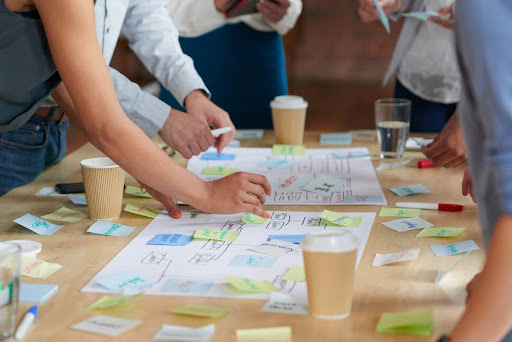
These themes require teams to identify variables and prioritize solutions.
1.Voter Engagement: Strategies to increase youth turnout in elections.
2.Work-Life Balance: Proposing a policy to eliminate unnecessary overtime.
3.Brand Awareness: How to increase Gen Z recognition for a legacy product.
4.Labor Shortage: Creative solutions for securing talent in an aging society.
5.Employee Retention: Designing a strategy to boost internal satisfaction scores.
B. OpenDiscussion Themes (Creative Ideation)
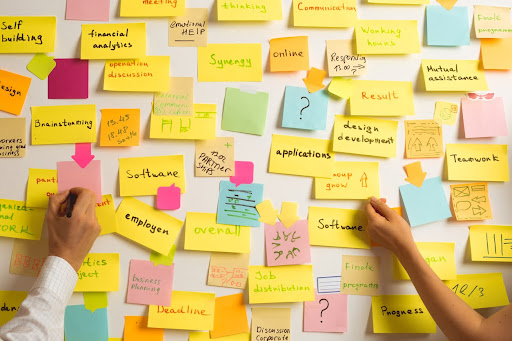
These test “Definition Setting”—how a team aligns on an abstract concept before debating.
1.The Ideal Workplace: Define the top 5 skills required for the 2030 workforce.
2.Future Forecasting: What does the local economy look like in 10 years?
3.Corporate Identity: Create a new “Global Catchphrase” for our organization.
4.Leadership Archetypes: Define the qualities of the “Ideal Manager.”
5.The Next Frontier: Selecting the location for the 2040 Olympic Games.
C. Selection-Based Themes (Decision Making)

These force teams to manage “Opportunity Cost” and justify their choices.
1.Flex-Work vs. Office: Should the company mandate a 100% remote or 100% office policy?
2.Digital vs. Analog: The future of print media in an AI-driven world.
3.Survival Logic: If stranded on a deserted island, which single tool is most vital?
4.Global Expansion: Should we open our next branch in Asia or Europe?
5.Public Policy: Should emergency services (Ambulances) become a paid service?
D. Business-Case Themes (Professional Simulation)

High-fidelity simulations that mirror actual marketing or strategy roles.
1.Market Entry Strategy: Drafting a plan for a regional rollout.
2.Profit Optimization: How to double net profit within 12 months.
3.Revenue Growth: Increasing sales in a declining rural market by 300%.
4.PR & Launch: Designing the media blitz for a new sustainable product.
5.Brand Creation: Conceptualizing a new “Sub-Brand” for a luxury market.
Section 2: 5 Project-Based Themes (Creative Execution)
These bridge the gap between “thinking” and “doing,” testing time management and cost-awareness.
1.Mascot Design: Creating the visual identity for a new product.
2.Video Production: Scripting and filming a 60-second “Community Impact” trailer.
3.Digital Presence: Proposing a UI/UX wireframe for a brand refresh.
4.Event Planning: Designing a flyer and itinerary for a 500-person community festival.
5.App Development: Prototyping a new “Student Productivity” application.
Section 3: 14 Game-Based Themes (High Engagement & Bonding)
They are designed to be Physically Inclusive—accessible to everyone regardless of athletic ability.
1.THE ENIGMA ESCAPE: A logic-based challenge where teams solve puzzles to “escape.” Tests information sharing under pressure.
⇒Download our THE ENIGMA ESCAPE guide.
2.Virtual Escape: The Digital Synergy Mystery: A digital escape room optimized for Zoom/Teams. Essential for hybrid team bonding.
3.Digital Sleuths Online: The Information Exchange Mystery: Using the “Jigsaw Method,” where different members hold different clues. Prevents “Silos” and encourages cross-functional talk.
4.The All-In Mega Puzzle Challenge: A collaborative logic game where everyone must contribute to finish the mission.
5.Marshmallow Challenge: The classic design-thinking game using spaghetti and tape. Rapid prototyping and PDCA.
6.Murder Mystery Training: A role-playing game where participants must negotiate and read complex social cues. High-level empathy and negotiation skills.
7.The Investigation Meeting: A forensic-style logic game where teams analyze “the evidence to find the truth.
8.SAMURAI BATTLE / Chanbara Battle: A modern take on “Chanbara.” It’s not about fitness; it’s about the strategic planning (“Gungi”) before the battle. Visualizes leadership and tactical agility.
⇒Download our SAMURAI BATTLE / Chanbara Battle guide.
9.SURVIVAL CONSENSUS: Ranking survival items (NASA/Jungle scenarios). Moves teams from conflict to agreement.
⇒Download our SURVIVAL CONSENSUS guide.
10.World Leaders (SDGs Business Game): A simulation of global trade and environmental ethics. Teaches the “Triple Bottom Line” (Profit, People, Planet).
11.Planet SOS (Online SDGs Mystery): An adventure game centered on solving global environmental crises.
12.SDGs Mapping Workshop: A strategic session linking your company’s actual goals to the UN SDGs.
13.2030 SDGs Card Game: A world-renowned simulation that visualizes the interconnectedness of economy and environment.
14.The Great Team (Leadership Simulation): A high-stakes business game where participants act as CEOs, managing resources and team assignments.
Implementation Strategy: Best Practices for Success

1. Define Your Competency Mapping
Before choosing a theme, decide what you are measuring. Use a Rubric-based Evaluation to remain objective:
- Collaboration: Did they actively listen? Did they use non-verbal cues (nodding)?
- Leadership: Did they ensure the quieter members had a voice?
- Logic: Was their final presentation based on data or “gut feeling”?
2. Global Accessibility & Inclusivity
When running these for diverse teams:
- Eliminate Language Barriers: Provide written briefs and visual aids in English.
- Safe Environment: Ensure “Game-based” activities are non-athletic to include everyone.
- Psychological Safety: Start with an Icebreaker to lower the “Power Distance” between senior and junior staff.
3. The Debrief is the ROI

Never end a session immediately after the game. A professional facilitator will lead a Reflective Session, connecting the game’s events to the team’s daily business operations. This ensures the learning “sticks.”
Is your team ready for a high-performance transformation?
Would you like me to develop a detailed 120-minute facilitation guide for one of the Business-Case themes listed above?
⇒Download our comprehensive guide.