Internal communication is the backbone of any successful organization. However, traditional “mandatory fun” events—awkward icebreakers or aimless happy hours—often fail to bridge the gap between departments.
For global companies, the challenge is even greater: How do you create an inclusive, engaging experience that transcends language barriers and personality types?
This guide outlines 10 unique team building activities designed not just for fun, but for measurable organizational growth. These programs combine immersive experiences with solid business logic to deliver a high Return on Investment (ROI) for your team.
⇒Download our comprehensive guide.
Why Invest in “Structured” Team Building?

Unlike a casual lunch, structured team building events offer three tangible benefits for your organization:
- Organizational Activation (Breaking Silos): Cross-departmental interaction sparks innovation. When employees from different backgrounds collaborate on a neutral playing field, it creates synergy that leads to real-world problem solving.
- Psychological Safety & Retention: Familiarity breeds comfort. Learning names and faces in a low-stakes, high-energy environment creates an open corporate culture where communication flows freely—a key factor in reducing turnover.
- Enhanced Engagement: Shared experiences build a sense of belonging. Stronger ties to colleagues elevate “engagement”—the desire to contribute to the organization’s success.
10 Unique Team Building Event Ideas
Here are 10 curated activities ranging from cerebral workshops to active strategy games, all optimized for diverse global teams.
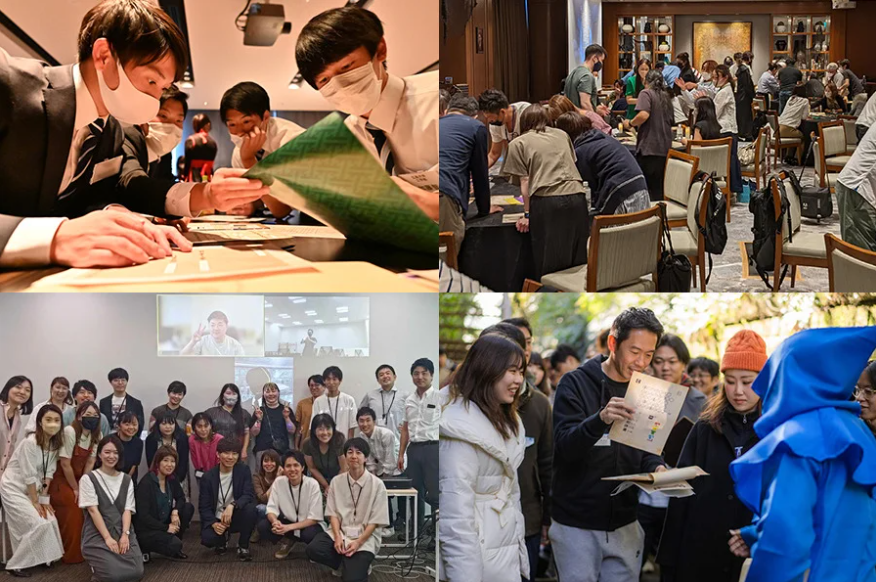
Category: Corporate Workshop / Puzzle Solving
This is an immersive workshop where teams must cooperate to solve riddles and escape a scenario, such as a locked conference room or virtual space. The activity is designed to leverage “Collective Intelligence,” presenting puzzles that are too complex for a single individual to solve alone. This compels participants to flatten the hierarchy, share information openly, and assign roles effectively, proving that true success requires total team collaboration.
・Specifications: 1.5 – 2.5 hours | 30+ Participants | In-person or Online
⇒Download our THE ENIGMA ESCAPE guide.
2. World Leaders (SDGs Business Simulation)
Category: Corporate Workshop / Strategy
In this business simulation, teams manage a company while striving to achieve Sustainable Development Goals (SDGs). It mirrors real-world business dynamics, requiring teams to negotiate with other groups for labor, capital, and information. By challenging participants to balance profit generation with environmental and social contributions, the game fosters deep strategic thinking and highlights the importance of long-term sustainability over short-term gains.
・Specifications: 3–6 people per team | Optional “SDGs Mapping” Workshop
Category: Corporate Workshop / Negotiation
This crisis management simulation tasks teams with agreeing on a survival strategy in extreme scenarios, such as a “Jungle Survival” or “Zombie Pandemic.” The core objective is to master the art of reaching consensus under pressure. Participants first think individually and then must reach a unanimous team decision. Through this process, teams quickly learn that collective decision-making typically yields better survival rates than individual intuition, making it an excellent exercise for refining communication styles.
・Specifications: 1.5 – 2 hours | 30+ Participants
⇒Download our SURVIVAL CONSENSUS guide.
4. The All-In Mega Puzzle Challenge
Category: Corporate Workshop / Remote Friendly
Nazopa is a cooperative puzzle game utilizing the “Jigsaw Method,” where the team is split into smaller sub-groups that each hold different clues. To solve the master puzzle, these sub-groups must communicate effectively with the larger group. This structure fosters “Total Cooperation” and serves as a powerful visualization of why breaking down departmental silos is essential for organizational success.
・Specifications: In-person or Online | Ideal for Onboarding
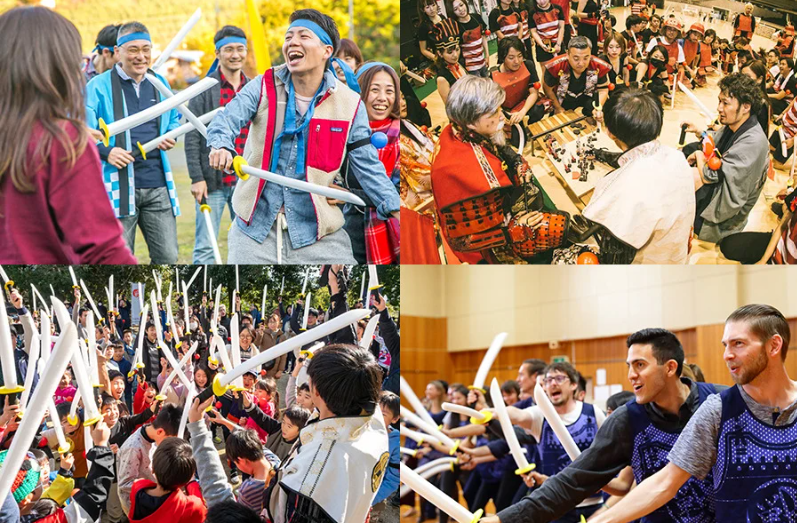
Category: Active Strategy / Outdoor
Often called the world’s safest war game, participants use soft sponge swords to knock a “life ball” off their opponent’s arm. Far from a simple physical contest, this is PDCA (Plan-Do-Check-Act) training disguised as fun. The game alternates between “Battle” rounds and “War Council” strategy meetings, compelling teams to plan a strategy, execute it, reflect on failures, and drastically improve their performance in the next round.
・Specifications: 1.5 – 2 hours | 30+ Participants | Safe & Inclusive
⇒Download our SAMURAI BATTLE / Chanbara Battle guide.
6. The Premium Guess Challenge
Category: Entertainment / Party Game
This sophisticated guessing game challenges participants to blind-test luxury items versus ordinary ones, such as high-end beef, tea, or art. The format acts as a unique equalizer that levels the playing field between management and staff—junior employees often outperform executives, creating a relaxed, humorous atmosphere. It serves as a fantastic icebreaker that naturally generates conversation without the awkwardness of forced introductions.
・Specifications: Digital voting system via smartphone
Category: Crisis Preparedness / Team Bonding
A unique twist on the traditional Field Day, this event focuses on disaster preparedness skills with races like “Relay carrying supplies” or “Emergency Kitchen Challenges.” It combines morale-boosting physical activity with essential safety training. Since preparing for a crisis requires genuine community cooperation, this shared experience fosters a deep sense of trust and bonding that extends beyond the workplace.
・Specifications: Includes emergency food tasting and evacuation drills
⇒Download our Disaster Preparedness Games guide.
Category: Inclusivity / Active Fun
This modern sports day utilizes “New Sports”—novel games like Bubble Soccer, Kin-Ball, or Dodgebee (soft frisbee) that most participants have never played before. By introducing unfamiliar sports, the event eliminates the “Jock Advantage” found in traditional athletics. Athleticism matters less than strategy and coordination, creating a truly inclusive environment where everyone starts as a beginner and contributes equally.
・Specifications: Customizable with catering options
⇒Download our NEW Undokai guide.
Category: Corporate Party / Strategy
This simulated casino experience allows teams to play Roulette, Blackjack, and Poker using mock currency. More than just a party, this is a resource management simulation. Teams must compete to maximize their investment purely through gameplay, sparking intense discussions on risk management and investment strategy (“How much do we bet on this round?”). It delivers the excitement of a high-stakes environment with zero financial risk.
・Specifications: 2 – 3 hours | 30+ Participants | Professional Dealers
⇒Download our KING OF LAS VEGAS guide.
10. Team Building BBQ
Category: Outdoor / Casual
Our “hands-free” BBQ service comes complete with facilitators and structured activities, such as a “Curry Making Championship” or “Meat Weight Guessing Game.” While dining together is the oldest form of bonding, the addition of structured activities prevents the event from becoming just another static meal. It ensures active engagement, encourages the mixing of different groups, and creates a dynamic social environment.
・Specifications: All equipment, food, and facilitators provided
How to Plan a Successful Event: A Timeline
Executing a company-wide event requires structured planning. Here is a standard timeline to ensure success.
- 5-6 Months Prior: Form a Planning Committee (4-5 members). Assign roles for logistics, communication, and creative planning.
- 4-5 Months Prior: Select the Activity. Choose an event that aligns with your current organizational goals (e.g., “Strategy” vs. “Communication”).
- 4 Months Prior: Send Invitations & Track RSVPs. Use digital tools to manage attendance. Set the RSVP deadline for one week after sending.
- 3-4 Months Prior: Logistics & Booking. Secure the venue and the activity provider. Popular dates fill up fast.
- 1 Month Prior: Create the Itinerary. Ensure the schedule allows ample time for “free conversation” alongside the structured activities.
- 1 Week Prior: Reminders. Send enthusiastic reminders to build hype and reduce no-shows.
Conclusion

Effective internal exchange is not about mandating fun; it is about creating a structured environment where psychological safety and engagement can flourish.
Whether you choose a strategic Samurai Battle, a collaborative Mystery Escape, or a relaxed Team Building BBQ, the result is a more cohesive, agile, and motivated team.
Ready to transform your team culture? We offer over 100 types of experience-based events with a track record of 1,400 annual events. We provide full English support, venue coordination, and professional facilitators to ensure your event is seamless.
⇒Download our comprehensive guide.