Traditional icebreakers often feel forced, leading to disengaged employees and awkward silences. To build a high-performing organization, you need activities that go beyond simple play. You need “Edutainment”—a strategic blend of education and entertainment that delivers a clear Return on Investment (ROI) by fostering psychological safety, sharpening collective intelligence, and improving retention.
Japanese corporate culture has mastered the art of “unspoken understanding” and collective unity. By integrating these unique cultural elements with professional training methodologies like the PDCA cycle, we have developed 31 curated activities designed to drive professional growth. Whether you are hosting 1,000 participants in a Tokyo hall or a hybrid session across continents, these games ensure every participant feels included and empowered.
⇒Download our comprehensive guide.
I. Large-Scale Events for Total Team Alignment (7 Selections)
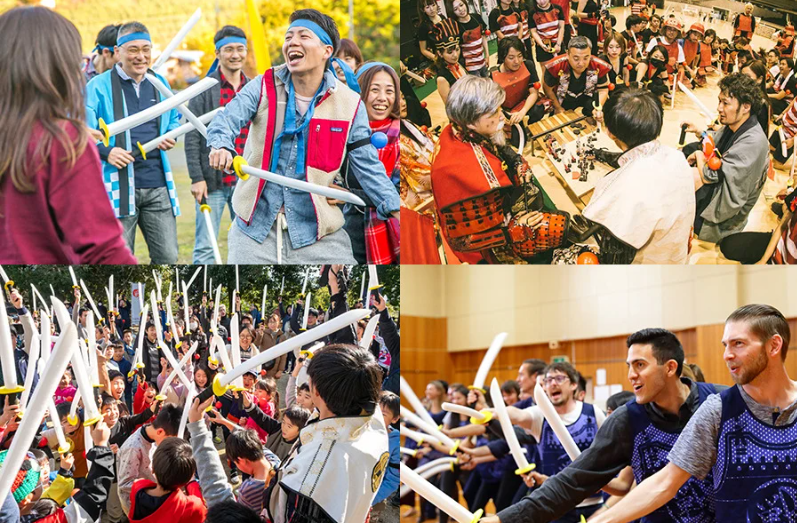
These high-energy activities are designed for large groups, making them ideal for corporate retreats or annual kick-offs.
- Samurai BATTLE / Chanbara Balttle; In this world-renowned activity, participants use soft foam swords to hit a “life ball” attached to the opponent’s arm. Far more than a simple game, it functions as a high-speed simulation of the PDCA cycle. Teams engage in a “War Council” (Strategy Meeting), execute their battle plan, and immediately reflect on the results to improve for the next round. This iterative process improves leadership and role allocation under pressure. The equipment is completely painless and safe for all ages.
- Duration: 60–90 minutes
- Capacity: 30–1,000+ people
- The All-In Mega Puzzle Challenge; This is a massive collaboration game where the entire organization works together to solve a giant puzzle. By collecting “mystery fragments” and sharing information across different tables, participants realize that their individual success is tied to the collective goal. It effectively boosts morale and creates a sense of unified achievement that transcends departmental silos.
- Duration: 60–120 minutes
- Capacity: 30–500+ people
- Cross-Over Hybrid Events; Designed for the modern workforce, these events connect on-site and remote employees in a single digital-physical space. By collaborating on the same missions simultaneously, they eliminate the isolation often felt by remote workers and foster true cross-border synergy.
- Duration: 60–90 minutes
- Capacity: 30–500 people
- Detective Challenge: The Crime Scene Investigation; Based on the “Jigsaw Method” of learning, teams must solve a logic-based mystery. Since different groups receive different clues, the game necessitates clear communication and information analysis across the entire room. This structure ensures that no single “hero” can solve it alone, requiring the team to leverage its collective intelligence.
- Duration: 90–120 minutes
- Capacity: 20–200 people
- World Leaders (SDGs Business Simulation); In this high-level simulation, teams act as corporations balancing profit-seeking with social and environmental impact. It sharpens strategic thinking and negotiation skills by challenging participants to navigate real-world ESG (Environmental, Social, and Governance) complexities and see the global impact of their local decisions.
- Duration: 120–180 minutes
- Capacity: 30–200 people
- 2030 SDGs Card Game; This world-renowned game helps participants understand the essence of sustainability. By managing limited resources and time to achieve both personal and global goals, it promotes proactive thinking and mutual understanding of diverse perspectives within a globalized economy.
- Duration: 120–180 minutes
- Capacity: 20–100 people
- Strategic Domino Challenge; A test of focus and collective patience where teams build and topple a massive domino chain. One mistake affects the entire outcome, which emphasizes that every role is vital. This activity requires intense concentration and seamless coordination, reminding the team that success is a shared responsibility.
- Duration: 60–120 minutes
- Capacity: 10–200 people
II. Collaborative Problem Solving & Group Work (12 Selections)
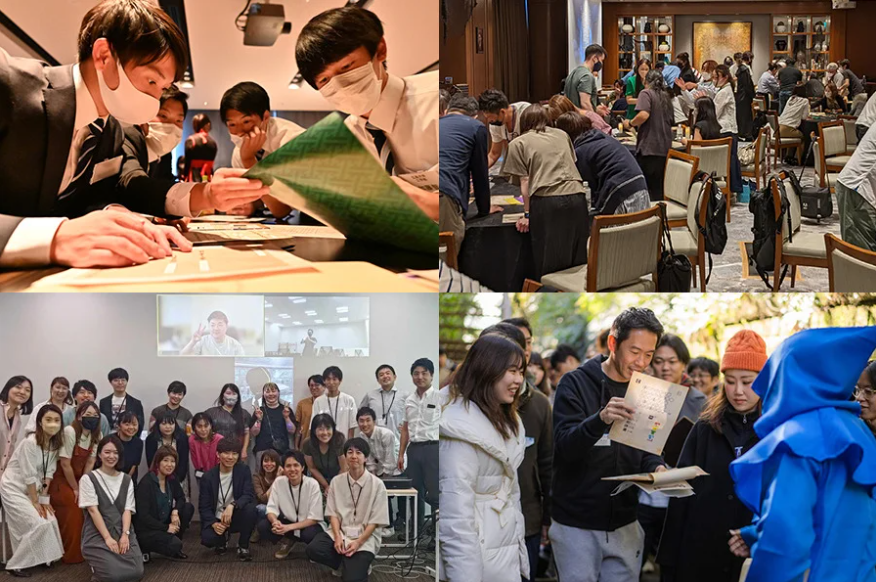
These mid-sized activities focus on deep communication and sharpening the team’s “mental sync.”
- THE ENIGMA ESCAPE; An immersive story-driven puzzle game held in conference rooms. The puzzles are specifically designed so that no single person can solve them, naturally driving the team to utilize diverse skill sets.
- Duration: 60–120 minutes
- Capacity: 10–200 people
- SDGs Mapping Workshop; This workshop helps employees “internalize” company values by mapping their daily tasks to global sustainability goals. It provides a sense of purpose and long-term vision, which is a key driver for employee retention and engagement.
- Duration: 90–120 minutes
- Capacity: 10–100 people
- The Marshmallow Challenge; Teams build the tallest tower using pasta and tape to support a marshmallow. This serves as a classic exercise in prototyping and iterative design, proving that “doing” is often more effective than over-planning in a fast-changing market.
- Duration: 30–45 minutes
- Capacity: 10–100 people
- Paper Tower; Using only 30 sheets of A4 paper, teams compete to build the tallest structure. This highlights the importance of resource management and strategic planning, as teams must decide how to balance height with structural stability.
- Duration: 30 minutes
- Capacity: 10–100 people
- Ping Pong Relay; A relay race using spoons or chopsticks to carry a ball. While it seems simple, it encourages team cheering and physical coordination, instantly lightening the atmosphere and reducing workplace stress through shared laughter.
- Duration: 20–30 minutes
- Capacity: 10–100 people
- Straw Tower Challenge; Similar to the paper tower but using straws, this activity focuses on the “Review” phase of the PDCA cycle. Teams reflect on their first attempt to improve their builds, directly translating to better business processes and continuous improvement.
- Duration: 30–45 minutes
- Capacity: 10–100 people
- Werewolf (Communication Strategy Game); A social deduction game that sharpens persuasion, observation, and critical thinking. Participants must read between the lines and build trust, which are essential skills for effective leadership and high-stakes negotiation.
- Duration: 45–60 minutes
- Capacity: 10–30 people
- The Logic Grid (Baseball Position Game); Teams solve a logic puzzle where information is distributed verbally among members. Because they cannot show their cards, it dramatically improves verbal communication and active listening skills required for remote collaboration.
- Duration: 45–60 minutes
- Capacity: 10–50 people
- Shooting Star (Visual Communication); Participants draw an object based on identical instructions. Comparing the vastly different results demonstrates how easily messages can be misinterpreted, highlighting the necessity for crystal-clear communication in global projects.
- Duration: 15–20 minutes
- Capacity: 5–100 people
- Helium Ring; A team must lower a hula hoop to the ground using only its index fingers. It requires perfect physical synchronization and a sense of “Ishindenshin” (unspoken understanding), teaching teams to move as one unified unit toward a common goal.
- Duration: 15–20 minutes
- Capacity: 5–20 people
- Murder Mystery Training; Participants act out a role-playing scenario to solve a crime. This develops advanced negotiation and empathy, as players must achieve their own secret goals while collaborating with the group to find the truth.
- Duration: 120–180 minutes
- Capacity: 10–50 people
- EXPLORATION Quest (Hirameki Quest); An outdoor scavenger hunt that turns a city or resort into a game board. It combines sightseeing with resource management, making it perfect for teams visiting Japan who want to build bonds while exploring the local culture and history.
- Duration: 120–180 minutes
- Capacity: 20–200 people
III. Icebreakers for Psychological Safety (7 Selections)
Use these to foster mutual respect and build a foundation of trust.
- Good or News; Participants share one positive event from their last 24 hours. This instantly shifts the team’s mindset to a positive state and reveals hidden personal interests, making subsequent professional discussions more fluid and open.
- Duration: 10 minutes
- Capacity: 5–20 people
- Imaginary Intro (Delusional Self-Introduction); Participants introduce themselves through a fictional scenario. This breaks down hierarchical barriers and allows for creative expression, making the workplace feel more approachable and encouraging out-of-the-box thinking.
- Duration: 15 minutes
- Capacity: 5–20 people
- The Birthday Chain; A silent game where the team lines up by birthdate using only gestures. This teaches the power of non-verbal communication and physical cues, which are often overlooked in digital-first or text-heavy environments.
- Duration: 10 minutes
- Capacity: 10–50 people
- The “Why” Behind My Career; Sharing the personal motivations behind one’s career choice strengthens team bonds through vulnerability. Understanding a colleague’s “why” leads to deeper mutual respect and long-term organizational alignment.
- Duration: 20–30 minutes
- Capacity: 5–20 people
- To Each Their Own (Ten People, Ten Colors); Predicting a teammate’s specific preferences encourages “perspective-taking.” Learning to see the world through a colleague’s eyes is the first step toward reducing workplace conflict and fostering an inclusive culture.
- Duration: 15 minutes
- Capacity: 5–20 people
- Common Ground Scavenger Hunt; Finding non-obvious commonalities with a partner in 5 minutes builds rapport rapidly. It moves beyond “work talk” to find the shared human identity that fuels better collaboration and psychological safety.
- Duration: 10 minutes
- Capacity: 5–50 people
- Secret Praise (Kage-home); Listening to the team discuss your strengths while your back is turned provides a powerful boost to self-esteem. It fosters a culture of recognition and appreciation, which is vital for maintaining a healthy and motivated team culture.
- Duration: 20 minutes
- Capacity: 5–15 people
IV. 10-Minute Energy Boosters (5 Selections)
Quick resets to maintain momentum during long strategy sessions or conferences.
- Bad Joke Contest; Teams compete to find the most “terrible” joke. This reduces stress and creates a “fail-safe” environment where people feel comfortable taking creative risks without the fear of judgment.
- Duration: 10 minutes
- Capacity: 10–50 people
- The Professional Bucket List; Sharing one life or career goal helps leaders align individual aspirations with the company’s broader mission. It transforms “just a job” into a meaningful platform for personal and professional growth.
- Duration: 10 minutes
- Capacity: 5–20 people
- The “Avoid 30” Game; A strategic counting game that requires foresight and pattern recognition. It’s a quick mental workout that gets the brain ready for complex problem-solving and strategic planning.
- Duration: 5–10 minutes
- Capacity: 5–20 people
- The Categories Game (Kokon-Tozai); Rapid-fire naming of items within a category improves mental agility and ensures that even the quietest team members have an equal chance to participate and contribute to the group energy.
- Duration: 10 minutes
- Capacity: 5–30 people
- Professional Charades; Acting out concepts without speaking enhances creative expression and bypasses language barriers, making it an ideal tool for diverse multicultural teams working in global environments.
- Duration: 10 minutes
- Capacity: 5–50 people
Ready to Elevate Your Next Event?

Whether you are hosting an executive retreat or a large-scale international summit in Japan, IKUSA provides seamless execution with professional English-speaking facilitators and culturally immersive activities. From venue coordination to customized program design, we ensure your team-building event delivers measurable results.
⇒Download our comprehensive guide.