In the modern corporate landscape, passive listening is out; active participation is in. While traditional seminars still have their place, forward-thinking organizations are shifting toward workshops—participatory events designed to foster autonomy, creativity, and deep connection.
Whether you are a global HR manager planning a retreat in Japan or a team leader seeking to bridge cultural gaps, understanding the mechanics of a successful workshop is crucial for maximizing ROI. This guide breaks down exactly what a workshop is, the different types available, and how to execute one that leaves a lasting impact.
⇒Download our comprehensive guide.
What is a Workshop? (Vs. A Seminar)

Originally meaning “a workplace” or “studio,” the term workshop now refers to a collaborative group learning session where participants conduct research or creative work together.
The Key Difference:
・Seminars are typically passive. An expert speaks; the audience listens. Attention often drifts.
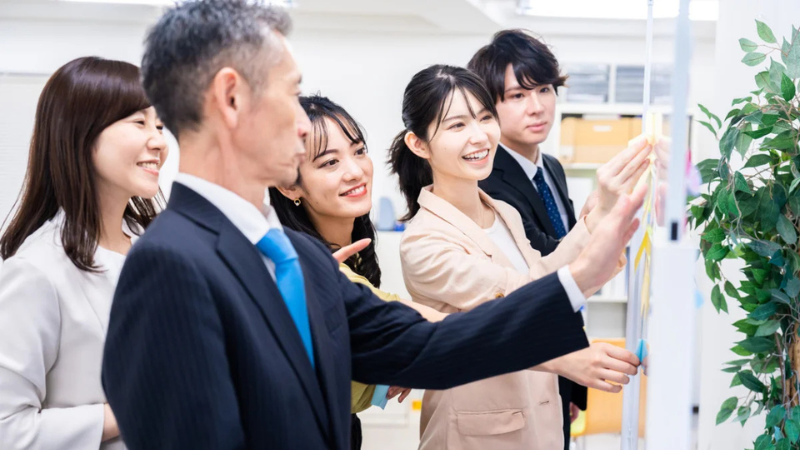
・Workshops are active. Facilitated by a professional who acts as a guide rather than a teacher, the focus is entirely on the participants. They must think, interact, and solve problems proactively.
Trend Alert: Many modern events now use a hybrid model—Part 1 is a lecture (theory), and Part 2 is a workshop (practice) to ensure concepts stick.
5 Types of Workshops to Revitalize Your Team

Workshops are versatile and can be adapted to various business needs. Here is how different formats drive specific team results.
1. The Makers Workshop (Crafts & Creation)
This format involves creating tangible items, such as traditional crafts, glass art, or leatherworking. By engaging in these tactile tasks, teams stimulate their creativity and expression in a way that office work rarely allows. It is accessible to all ages and genders, making it a low-stress, highly inclusive entry point for team bonding.
2. Expression & Movement (Art & Dance)
Rooted in theater and performing arts, these workshops focus on physical expression, such as dance, yoga, or painting. The physical movement acts as a powerful relaxation tool, breaking down professional barriers and allowing for authentic self-expression and stress relief.
3. Social Impact Workshops (CSR)
These sessions tackle complex social issues—environmental problems, community development, or administrative challenges. They are excellent for Diversity, Equity, and Inclusion (DEI) training because they bring together people with different values and standpoints to discuss and engineer solutions collaboratively.
4. Business Strategy Workshops
Widely used for new employee training, management alignment, or executive retreats, these sessions move away from top-down directives. Instead, participants brainstorm and dig deep into specific themes. This flat communication structure often generates innovative ideas for business improvement that would not surface in a standard meeting.
5. Specialized Skill Labs (Academic/Research)
Often used in psychology or sociology contexts, these workshops replace one-way academic lectures with interactive research and peer learning, ensuring that complex knowledge is actively processed and retained.
Benefits & Challenges
Why should a company invest time and budget into a workshop?
The Benefits (Pros)
・Ownership & Autonomy: Because participants are active players, they develop a sense of ownership over the topic. For example, in a disaster prevention workshop, safety becomes a personal responsibility rather than a company rule.
・Deep Understanding: “Learning by doing” prevents the “I thought I understood it” trap common in seminars.
・Enhanced Communication: Collaborative tasks naturally encourage interaction, fostering cooperation and improving team cohesion.
・Broader Perspectives: Engaging with colleagues from different departments or backgrounds exposes participants to diverse values, expanding their professional worldview.
The Challenges (Cons)
・Ambiguity: If the goal is unclear, participants may enjoy the activity but leave without learning anything substantial.
・Social Anxiety: In groups of strangers, participants may feel nervous. A skilled facilitator is essential to bridge gaps and guide the discussion.
How to Plan a Successful Workshop: 5 Steps
Follow this roadmap to ensure your event runs seamlessly.
- Define the Goal: Clarify why you are holding this event. For example, is the goal “to start preparing for a natural disaster immediately”? Vague goals lead to vague results.
- Design the Content: Once the goal is set, choose the activity (e.g., “simulating a disaster” or “learning about supplies”). Decide on the duration and flow. If you lack ideas, consult a professional agency.
- Preparation: Secure the venue, staff, equipment, and schedule. Don’t forget to promote the event internally.
- Execution: Run the event, but remain flexible to handle any on-the-day surprises.
- Debrief & Feedback: Always gather feedback (surveys) to measure satisfaction and goal achievement. Use this data to improve future initiatives.
3 Keys to Success
- Design an Icebreaker: Start with a simple game or quiz to “melt the ice” (relieve tension) and get people talking.
- Share the Goal Early: Explicitly state the objective at the start. When participants know the destination, their engagement and understanding increase significantly.
- Utilize a Facilitator: A professional facilitator does more than MC; they manage the energy, ensure equal participation, and keep the group focused on the objective.
Unique Workshop Case Studies in Japan
For international teams visiting Japan, standard workshops might feel generic. Here are three advanced business workshops organized by IKUSA that combine immersive storytelling with practical skill development.
This is an immersive negotiation simulation where teams must agree on a survival strategy in extreme scenarios, such as “Jungle Survival” or “Urban Disaster.” Participants analyze the situation, prioritize items for survival, and debate their choices to reach a unanimous team decision.
It reveals how common sense varies between individuals. By requiring participants to navigate conflicting values and prioritize logic over emotion, it enables the art of agreement without compromise—a vital skill for cross-cultural teams.
⇒Download our SURVIVAL CONSENSUS guide.
Unlike physical obstacle courses, this is an intellectual challenge where teams become protagonists in a story and must escape a locked situation by solving a series of complex puzzles within a strict time limit.
Success is impossible without total information sharing and role division. It naturally breaks down hierarchies; a junior staff member might solve a puzzle that stumps a manager, creating a flat, highly communicative environment that boosts psychological safety.
⇒Download our THE ENIGMA ESCAPE guide.
3. World Leaders
This is a high-level strategic business simulation where teams act as corporations competing for profit while managing labor and capital. However, unlike traditional business games, ignoring social and environmental costs leads to failure.
It moves beyond dry lectures to let participants experience the tension between short-term profit and long-term sustainability. It sharpens negotiation skills and strategic thinking, proving to participants that social responsibility is a driver of business value, not just a hurdle.
Ready to Sync Your Team?

Workshops offer high participant satisfaction and deeper learning than passive seminars, but their success depends on clear goal-setting and professional execution.
If you are looking for a unique team-building experience in Japan that goes beyond the boardroom, IKUSA supports over 1,000 events annually. From English-speaking facilitators to venue coordination, we handle the logistics so you can focus on your team.
Looking for a unique team building idea in Japan? Contact us today to plan your event.
⇒Download our comprehensive guide.