The Strategic Value of Team Play
Engaging in structured play allows employees to connect outside of daily tasks, revealing new facets of their personalities and strengths. These games are designed to bridge communication gaps and build a more accessible, harmonious work environment.
⇒Download our comprehensive guide.
High-Energy & Physical Activities
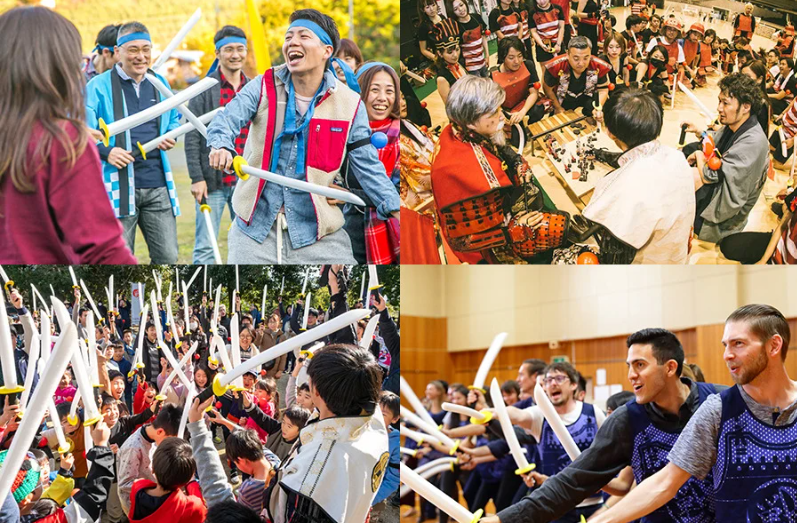
These activities are ideal for breaking down silos and encouraging active participation through movement.
・Corporate Undokai, Internal Field Day: Dividing the company into teams to compete in various events fosters unity and a sense of shared purpose. To ensure high ROI, programs must include inclusive activities so that everyone, regardless of athletic ability, can contribute.
・Collaborative Cooking: Culinary tasks mirror project management: teams must assign roles such as prep, cooking, and plating to succeed. This “putting the right person in the right place” approach strengthens operational workflows and concludes with a shared meal to facilitate deeper bonding.
・Balloon Volleyball: Using a balloon slows the pace of the game, making it accessible for all ages and fitness levels. Success requires constant verbal coordination, as every member must touch the balloon at least once per round.
・Treasure Hunt: Teams navigate a map to locate hidden items, requiring strategic planning and efficient communication. The “Sengoku Treasure Hunt” variant incorporates company history or mission statements into the riddles.
・Blindfolded Navigation: In teams of three, one person is blindfolded, one provides non-verbal support, and one gives verbal directions. This builds radical trust and tests the clarity of leadership instructions.
・SAMURAI BATTLE / Chanbara Battle: Using foam swords to tag a ball on an opponent’s arm, this activity emphasizes strategy over strength. Pre-game “war councils” or strategy meetings are vital for analyzing the opposition and deploying tactics.
⇒Download our SAMURAI BATTLE / Chanbara Battle guide.
・THE ENIGMA ESCAPE: Teams immerse themselves in a narrative to solve puzzles. Because success depends on collective intelligence rather than physical prowess, it levels the playing field and boosts overall motivation.
⇒Download our THE ENIGMA ESCAPE guide.
・Gesture Charades: Using only body language to continue a sequence of words in a word chain, “Shiritori” format builds non-verbal communication skills and creates a lighthearted atmosphere that strengthens interpersonal bonds.
Problem-Solving with Everyday Objects
These games use simple materials to simulate resource management and iterative testing.
・Helium Ring: Lower a hula hoop to the ground using only index fingers. This activity fosters collective synchronization and rewards group patience.
・Paper Tower: Build the tallest structure possible using only 30 sheets of A4 paper. It challenges members to apply strategic planning and structural thinking.
・Marshmallow Challenge: Create a tower using spaghetti, tape, and string with a marshmallow on top. This exercise encourages iterative testing and a “learn by doing” trial-and-error mindset.
・Straw Tower: Use flexible straws and tape to build a stable, high tower. This task promotes precision and the efficient optimization of limited resources.
・Double Dutch: Two turners and one jumper must synchronize their rhythm. It is designed to cultivate empathy and help the group discover a shared team “beat.”
Creative & Visual Collaboration
Visual exercises highlight how different individuals interpret the same information, which is a key insight for avoiding workplace misunderstandings.
・Portrait Guessing: One person draws a subject, and others guess who it is. This develops observation skills and helps members learn to read their colleagues.
・The Shooting Star Challenge: After a free-draw session, a leader gives specific instructions for the second drawing. Comparing results helps teams identify if their internal communication is as clear as they assume.
・Collaborative Drawing: Two people combine their work (e.g., one draws the top half, one the bottom) to create a single image. This fosters adaptability and mutual consideration.
・Back-Drawing Transmission: One person draws on a partner’s back with their finger, and the partner must replicate it on paper. This requires deep focus on non-verbal signals and synchronization.
Communication & Logic Games
These exercises are highly effective for identifying leadership styles and improving consensus-building.
・Commonality Hunt: Pairs ask questions to find as many shared traits as possible. This shifts the focus toward empathy and finding common ground.
・NASA Moon Survival: Individuals, then teams, rank items needed for survival on the moon. Comparing the team’s score against the expert answer demonstrates the power of collective reasoning.
・The Baseball Logic Puzzle: Members are given unique pieces of information about a baseball lineup that they cannot show others. The team must verbalize their data to find the answer, ensuring every voice is heard.
・Spot the Liar: Teams try to identify which member is telling a lie. This sharpens observation and helps members recognize the subtle cues of their teammates.
・The Message Relay: Passing a specific phrase through a line of people tests the team’s ability to maintain accuracy under time pressure.
・Brainstorming Card Game: Focused on quantity over quality, this encourages a “no bad ideas” environment where psychological safety allows innovation to thrive.
・Forbidden Jargon Challenge: Describing a term without using “loanwords” or specific industry jargon. This forces speakers to simplify complex ideas for better cross-departmental understanding.
・The Standard Guessing Game: One person lists their top three favorites in a category (e.g., “favorite soup ingredients”), and others must guess them. This is an effective icebreaker for understanding individual values and preferences.
Execution and Venue

For organizations looking for a turnkey solution, IKUSA ARENA in Tokyo offers a 1,000-square-meter facility capable of hosting large-scale corporate events regardless of weather. Professional facilitators can manage the entire process, from planning to execution, ensuring the activities align with your specific team-building goals.
Would you like me to create a sample itinerary for a half-day team-building session using a selection of these games?
⇒Download our comprehensive guide.