In any industry, business success is unattainable without seamless internal communication. Even high-performing individuals cannot complete complex projects in isolation; success requires a collective effort where information flows freely and alignment n is constant.
Miscommunication, often stemming from a lack of rapport, leads to human error and missed deadlines. To foster a culture where employees feel comfortable reporting small mistakes or offering honest feedback, teams must build relationships that go beyond daily tasks.
⇒Download our comprehensive guide.
The Strategic Foundation of Effective Events

To maximize the ROI of team building, organizations should adhere to two core principles:
- Target 100% Participation: Selective “opt-in” gatherings often fail to improve the overall team dynamic because they only reinforce existing social silos.
- Integrate into the Workday: Ideally, these activities should occur during business hours. Treating event preparation and execution as a legitimate work responsibility ” maintains employee motivation and prevents burnout.
12 Outdoor and Active Activities for Team Unity
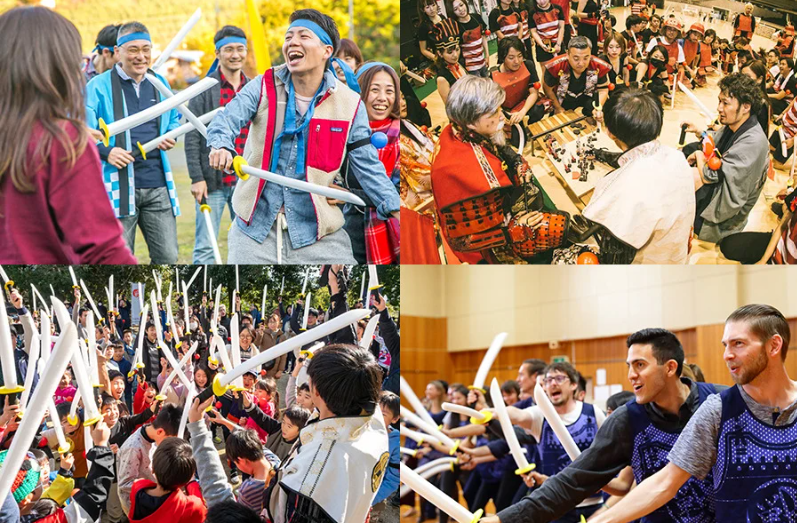
These dynamic and engaging events are designed to break down hierarchical barriers and improve physical well-being.
・The Corporate Field Day, “Undoka”i: A nostalgic, large-scale event where teams compete in various physical challenges. It promotes health and provides a shared sense of purpose for large organizations.
⇒Download our NEW Undokai guide.
・SAMURAI BATTLE / Chanbara Battle: Participants use foam swords to knock a ball off an opponent’s arm. This encourages rapid PDCA cycles (Plan-Do-Check-Act) as teams must constantly refine their combat strategies.
⇒Download our SAMURAI BATTLE / Chanbara Battle guide.
・Team Trekking: Climbing a mountain requires endurance and mutual support. Sharing the struggle to reach a summit fosters long-term bonds and a sense of shared achievement.
・THE ENIGMA ESCAPE: Teams must solve puzzles within a time limit to “escape”. This highlights the necessity of diverse perspectives and collaborative problem-solving.
⇒Download our THE ENIGMA ESCAPE guide.
・Team Building BBQ Challenge: Moving beyond the restaurant setting, a BBQ requires participants to divide tasks like fire-starting, food prep, and cooking, which naturally promotes organic conversation.
・Bubble Soccer: Players compete while encased in inflatable bubbles. The physical equalizer of the bubble allows employees of all ages and genders to compete on even footing, fostering inclusivity.
・Sunset Cruising: Hosting a party on a boat provides an exclusive environment that rewards employees for project milestones. Customizing the program with live music or sports viewing increases engagement.
・The “Hadaka no Tsukiai” Wellness Visit: A visit to a traditional bathhouse, “Sento”, focuses on breaking down social barriers. This “naked relationship” concept promotes vulnerability-based trust and relaxation.
・Company Retreats: Spending 2–3 days away from the office allows for deeper interpersonal understanding and mental refreshment. Success hinges on including free time and gathering employees on the destination to ensure buy-in.
・Tournament Bowling: A classic, accessible sport that levels the playing field across generations. Using “handicap cards” (e.g., throwing with the non-dominant hand) keeps the competition light and fun.
・Corporate Relay Races, “Ekiden“: Participating in a relay race creates a unified front between runners and supporters. It offers networking opportunities with other firms via dedicated booths.
・Curated Bus Tours: For teams seeking low-stress outings, pre-planned tours focusing on seasonal harvests or factory visits are effective.
18 Indoor and Strategic Activities for Daily Engagement
These activities focus on psychological safety, creativity, and the deepened mutual understanding that comes from knowing colleagues better.
・Mario Kart Tournaments: Using popular gaming consoles allows up to 12 people to compete simultaneously. Projecting the game on a large screen engages both players and spectators.
・The Office Rec Room: Installing table tennis, billiards, or darts creates a space for spontaneous, cross-departmental interaction during breaks.
・Family Day: Inviting families to the office helps colleagues understand each other’s lives outside of work. This builds a supportive environment for handling family-related commitments.
・Monthly Birthday Celebrations: A simple but effective way to ensure every employee is recognized. Peer-to-peer gift exchanges can bridge gaps between different departments.
・Merit-Based Awards Ceremonies: Publicly recognizing achievements boosts motivation. To be effective, categories should include non-sales departments like HR and Accounting.
・The Shuffle Lunch: The company subsidizes lunches for groups of employees from different departments. This facilitates networking that would not occur in a standard workday.
・Team Cooking Challenges: Preparing a single large meal, like curry or stew, mimics project management. It requires clear role allocation and cooperation to reach a successful result.
・Seasonal Viewing Parties: Observing the cherry blossoms, “Hanami”, or the autumn moon provides a low-pressure social setting.
・Strategic Desk Shuffling: Implementing a “free address” system or a randomized seating chart prevents social stagnation. Randomizing seats can spark new ideas through unexpected conversations.
・Interactive “Karaoke”: Setting specific rules (e.g., “songs with a number in the title”) ensures everyone can participate regardless of their singing ability.
・Social Deduction Games: Games like “Werewolf” or “Word Wolf” improve observation skills and help participants understand their colleagues’ communication styles.
・Board Game Tournaments, “Donjara“: Simplified versions of traditional games like “Mahjong” are accessible to all ages and easy to organize in teams.
・The “Beer Meeting”: Introducing moderate alcohol into a brainstorming session can relax the atmosphere and lead to more creative, candid input.
・Whatchamacallit Basket: A fast-paced game similar to musical chairs where an “it” person calls out traits (e.g., “everyone wearing blue”). It’s a quick way to discover shared interests.
・Departmental Arm Wrestling: A simple, high-visibility competition that often reveals surprising strengths and encourages enthusiastic cheering from the sidelines.
・Employee Trivia Quizzes: Creating a quiz based on fun facts about staff members (e.g., “Who once played in a national baseball tournament?”) builds camaraderie.
・Live Sports Spectating: Attending a match as a group—especially if it’s the company’s own team—fosters a powerful sense of corporate identity and pride.
・Remote Gaming Events: For distributed teams, online gaming platforms ensure that no one is excluded from the company culture regardless of their location.
Conclusion
The most effective corporate events are those designed with the specific needs and culture of the employees in mind. By shifting the focus from “forced fun” to “strategic engagement,” HR leaders can create a more resilient and communicative workforce.
Would you like me to create a detailed implementation checklist for any of these activities, such as the Samurai Battle or the Shuffle Lunch?
⇒Download our comprehensive guide.