The Strategic Value of “Sengoku” Team Building
Traditional corporate events can often feel repetitive. By adopting the “Sengoku Undokai” (Warring States Period Sports Day) framework provided by IKUSA, companies can simulate high-pressure environments that require real-time strategy, role distribution, and psychological safety. These activities translate the discipline and tactical brilliance of ancient Japanese warriors into modern business competencies such as synergy and seamless execution.
⇒Download our comprehensive guide.
1. Shuriken Battle: Strategic Recovery and Agility
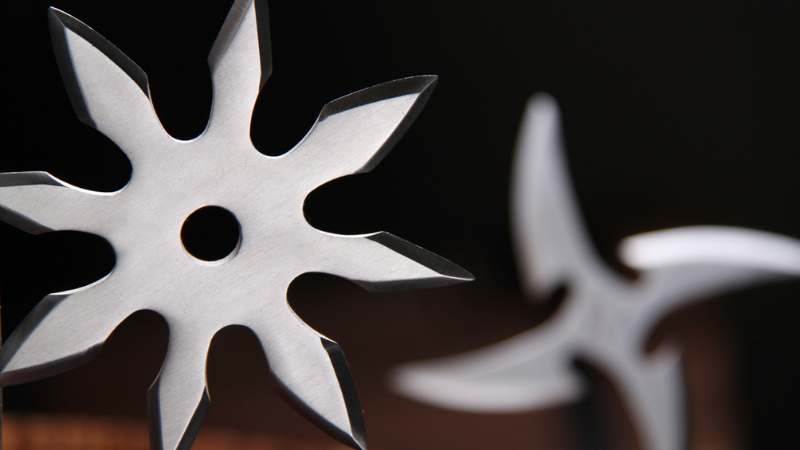
This activity utilizes soft, frisbee-style “shurikens” (throwing stars) in a format similar to dodgeball. Participants who are hit must exit the court, but they can be “revived” if they successfully hit an opponent from the sidelines. This mechanic encourages teams to develop recovery strategies and maintain focus even after a setback. Victory depends on rapid communication and the ability to mislead the opposition through quick passing.
2. Goemon Long Rope: Rhythmic Synchronization
Inspired by the legendary thief “Ishikawa Goemon”, this challenge requires a team to jump a large rope while simultaneously collecting gold coins from the ground. Success is not determined by individual athleticism but by the collective rhythm established by the rope turners and the jumpers. It highlights the importance of timing and environmental awareness, as wearing traditional wide-sleeved costumes increases the difficulty of the task.
3. Giant Rice Bale Relay: Collaborative Momentum
In this relay, teams of two must navigate a large, heavy rice bale across a course. Because the bale’s weight distribution can cause it to veer off-course, participants must constantly adjust their strength and direction in tandem with their partner. This exercise is an excellent metaphor for cross-departmental collaboration, requiring participants to prioritize team movement over individual speed.
4. Provision Toss, Hyoryo-ire : Resource Management
Based on the traditional ball-toss game, teams compete to throw “provisions” into a high basket. To maximize efficiency within the one-minute time limit, teams must assign specific roles, such as designated “gatherers” who feed projectiles to the “throwers.” This activity tests a team’s ability to optimize resources and execute a plan under strict time constraints.
5. Sankin Kotai Relay: Seamless Transitions
This is a stylized relay where a traditional “Jinbaori”, a sleeveless samurai surcoat, serves as the baton. The primary challenge lies in the transition: the runner must successfully transfer the garment to the next person without losing momentum. It emphasizes the “hand-off” phase of project management, teaching employees that the success of the next person is just as important as their own performance.
Using specialized sponge swords, participants attempt to knock a ball, representing their “life,” off an opponent’s arm. This activity requires high levels of leadership and tactical planning. Teams must avoid being surrounded and maintain awareness of blind spots to survive. A dedicated strategy meeting before the match allows teams to clarify roles and improve overall team cohesion.
⇒Download our SAMURAI BATTLE / Chanbara Battle guide.
The SHINOBI challenge expands on the sword-fighting mechanic by introducing specific mission objectives, such as “Scroll Seizing” or “Bomb Placement”. This necessitates a complex division of labor between offensive and defensive units. In scenarios involving three or more teams, participants may even negotiate alliances, mirroring real-world business partnerships and diplomatic maneuvers.
⇒Download our NINJA BATTLE guide.
8. Samurai Water Battle
Ideal for summer events, this activity replaces swords with water pistols shaped like matchlock guns. Participants aim for water-sensitive “soul” badges that reveal a skull icon when wet. With variations like “General Battle,” where the game ends if the leader is hit, teams must learn to protect their key assets while simultaneously identifying and exploiting the opponent’s weaknesses.
9. Pebble Toss, TSUBUTE: Tactical Positioning
Participants throw soft projectiles, known as “tsubute,” at the opposing team while wearing protective goggles. The inclusion of obstacles on the field requires teams to use the environment for cover. This game discourages “lone wolf” behavior, as individual attackers are easily eliminated; instead, it rewards coordinated group movement and collective decision-making.
10. Yabusame Archery, KYU: Risk Management
This activity utilizes soft-tipped Japanese bows to eliminate opponents. A unique rule allows players to stay in the game if they catch an incoming arrow, adding a layer of risk-reward assessment to every shot. Because participants can only carry three arrows at a time, they must balance their defensive positioning with the need to venture out and scavenge for spent ammunition.
Conclusion
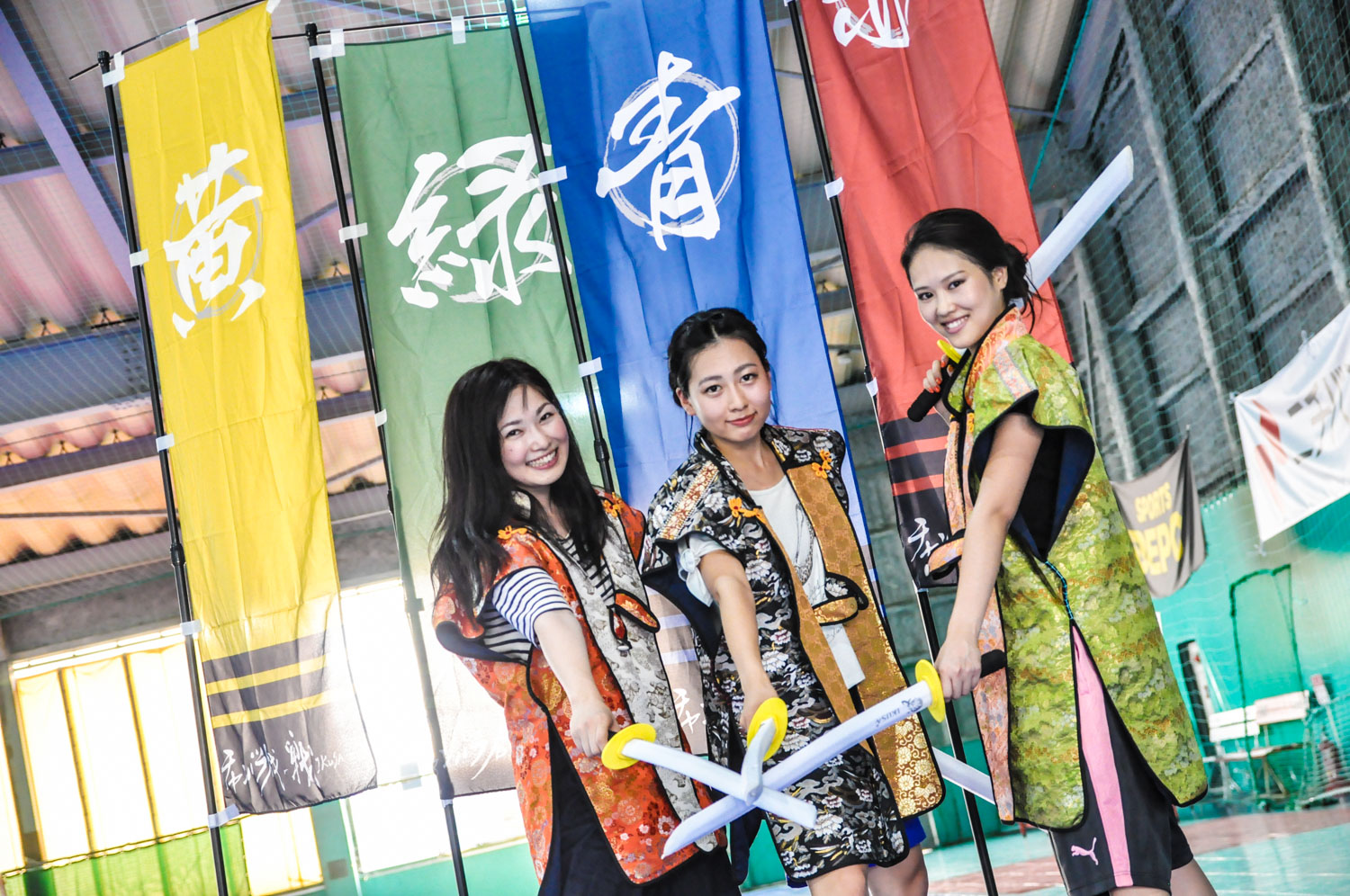
These 10 activities, provided through IKUSA’s “Sengoku Undokai” service, offer a unique blend of Japanese heritage and modern team-building theory. By stepping into the roles of ninjas and samurai, your employees can develop the agility, leadership, and collaborative spirit necessary for today’s competitive landscape.
Would you like me to draft a sample event itinerary or a cost-benefit analysis based on these activities for your next quarterly planning meeting?
⇒Download our comprehensive guide.